


Plaster Cast Application or Removal in Warsaw
Do you need to have a cast applied after a fracture or safely remove it once treatment is complete? At CareLife Clinic in Warsaw’s Ochota district, we apply and remove casts following a prior orthopedic evaluation. The doctor examines the limb, analyzes available X-rays, and checks blood flow, sensation, and the extent of swelling, then selects the appropriate stabilization method based on the type of injury. Not every fracture or sprain requires a full cast—in some cases, a splint or brace may be the appropriate solution. After the cast is removed, the orthopedist assesses healing, range of motion, and the need to begin rehabilitation.
+340 Satisfied Patients
+12 Specialists on the team
+2,400 Procedures per year
+15 Years of experience

X-ray and Cast Application in Warsaw
A cast is applied to keep an injured limb in a position that allows bones, ligaments, or other tissues to heal. Immobilization may involve, among other things, a finger, hand, wrist, forearm, foot, ankle, or lower leg. The extent of immobilization is determined by an orthopedic surgeon based on the type of injury, swelling, stability, and imaging results.
The cast should also be removed only after the doctor’s approval. Premature removal may lead to displacement of bone fragments, re-injury, or improper healing. After the cast is removed, the orthopedic surgeon assesses tenderness, stability, and range of motion, and determines whether the limb can bear weight.
When is it necessary to have a cast applied
at CARELIFE CLINIC?
A cast is primarily used for fractures that require stable immobilization. It may also be necessary after bone reduction, certain sprains involving ligament damage, dislocations, and surgical procedures. However, not every bone fracture or sprain requires a full cast.
In the case of a fresh injury with significant swelling, the doctor may first apply a plaster splint that does not tightly encircle the entire limb. This allows room for swelling to increase and reduces the risk of compression. A full cast can be applied later, once the condition of the tissues allows it.
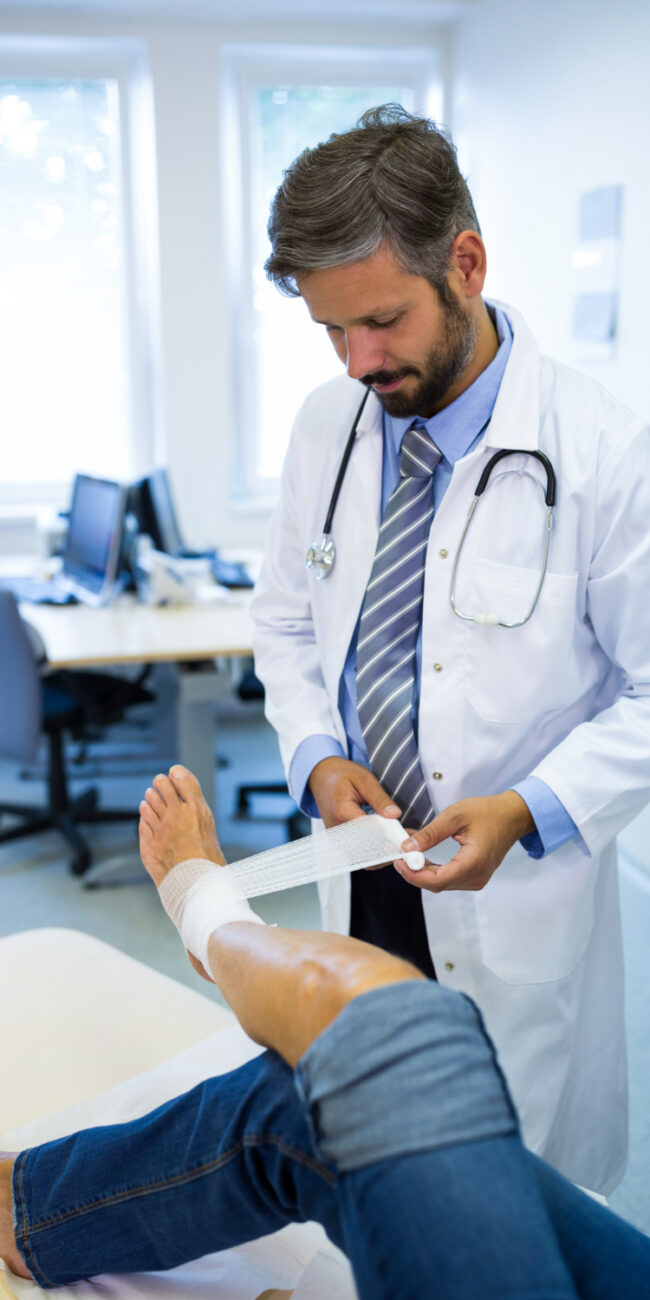
Doctors who apply and remove casts at Carelife Clinic


At Carelife Clinic, patients are cared for by experienced and qualified orthopedic surgeons who specialize in the diagnosis and treatment of musculoskeletal problems. We combine medical knowledge, clinical experience, and a personalized approach to provide patients with effective and safe orthopedic care.
We’re open 7 days a week!
When is it safe to remove the cast?
The timing of cast removal depends on the type of fracture, the patient’s age, the location of the injury, and the healing process. For example, simple finger injuries may require about 2–4 weeks of immobilization, many wrist fractures 4–6 weeks, and ankle or lower leg injuries 6–8 weeks or longer. These are approximate time frames, not fixed dates for every patient.
The doctor decides when to remove the cast based on an examination of the limb and, in some cases, a follow-up X-ray. The absence of pain does not automatically mean that the bone has fully healed. You should not cut a hard cast on your own. An exception may be a special removable soft cast if the doctor has clearly specified the timing and method for its removal.
Orthopedic Consultation Before Applying or Removing a Cast
Before applying a cast, the orthopedist examines the site of pain, the position of the limb, the extent of swelling, joint stability, and the ability to move the fingers. The orthopedist also assesses sensation, skin temperature, finger color, and pulse to rule out circulatory disorders or nerve damage.
When removing the cast, the doctor reviews the duration of treatment, the injury records, and the follow-up visits to date. After removing the dressing, the doctor reassesses pain, stability, range of motion, and the ability to gradually bear weight on the limb. If there are any doubts, the doctor may recommend continued immobilization, a brace, or a follow-up imaging study.
X-rays and Diagnostics Before Selecting a Immobilization Method
X-rays are the primary diagnostic test when a fracture or dislocation is suspected. Images are typically taken in at least two projections to assess the location of the injury, the alignment of the bone fragments, and involvement of the articular surface. A follow-up X-ray may be needed after bone reduction, during treatment follow-up, or before the cast is removed.
For complex intra-articular fractures, the doctor may recommend a CT scan. Ultrasound and MRI, on the other hand, are used when tendon, ligament, or other soft tissue injuries are suspected. The patient should bring not only the report but also the disc or access to the images to the appointment.
Cast, splint, or brace—how to choose the right immobilization?
A full-circular cast provides rigid immobilization and limits the possibility of the patient removing it on their own. It is used, among other things, for fractures that require the limb to be maintained in a specific position. Because it tightly encases the limb, it is not always the first choice immediately after an injury involving significant swelling.
A splint stabilizes only part of the limb’s circumference and is secured with a bandage. It better accommodates increasing swelling, which is why it is often used in the first few days after an injury. The brace is lighter and can be removed for hygiene or exercise, but it is suitable only for injuries where this form of stabilization provides sufficient protection.
Plaster Cast Application or Removal in Warsaw - Price List
doctor. Andreas Koufas
Orthopedic consultation – 300 PLN
Orthopedic consultation + ultrasound of one joint – 450 PLN
Orthopedic consultation + ultrasound of two joints – 600 PLN
Andrzej Zalewski, M.D., Ph.D.
Orthopedic consultation – 300 PLN
Orthopedic consultation with diagnostic ultrasound – 350 PLN
Maciej Kostewicz, M.D.
Orthopedic consultation – 300 PLN
Orthopedic consultation with diagnostic ultrasound – 350 PLN
Ultrasound exam (with report)
Ultrasound of one area – 300 PLN
Ultrasound of two areas – 500 PLN
- joints (knee, shoulder, hip, elbow, wrist, hand, ankle, foot)
- muscles
- tendons
Jan Szneider, MD
Orthopedic consultation – 400 zł
Orthopedic consultation with diagnostic ultrasound – 400 PLN
Adam Bałys, M.D.
Orthopedic consultation – 300 PLN
Orthopedic consultation with diagnostic ultrasound – 350 PLN
Orthopedic consultation + ultrasound of one joint – 450 PLN
Orthopedic consultation + ultrasound of two joints – 600 PLN
Treatments
Procedures
Joint/ganglion/bursal puncture – 250 zlotys
Intra-articular/periarticular block – 250 PLN
Hyaluronic acid injection:
Biolevox HA One – 800 PLN
Biolevox HA Mini – 300 PLN
PRP (platelet-rich plasma) injection:
1 joint/area – 1,000 PLN
2 joints/areas – 1,900 PLN
Treatments are performed following prior qualification during an orthopedic consultation (additional fee applies according to the price list).
Are you thinking about choosing a service?
We can help you
We’re open 7 days a week!
Traditional, synthetic, and waterproof plaster—how do they differ?
A traditional plaster cast is made from bandages soaked in plaster. It conforms well to the shape of the limb and is easy to mold, but it is relatively heavy, not water-resistant, and usually takes 24–48 hours to dry completely.
Synthetic casts are most often made of fiberglass or plastic. They are lighter, more resistant to cracking, and harden faster—usually within a few dozen minutes. However, the outer layer’s water resistance does not mean that the entire cast can be submerged. The standard lining beneath the cast can still absorb moisture.
Only systems equipped with a special waterproof lining are intended for bathing. Even in these cases, you must follow the instructions regarding rinsing and thorough drying. It’s a good idea to confirm the availability of a specific type of material before your appointment.
Applying a Cast After a Fracture, Sprain, or Limb Injury
In the case of a fracture, the cast holds the bone fragments in a position that allows for healing. If displacement has occurred, reduction may be necessary before applying the cast. Unstable, open, or comminuted fractures may require surgical treatment rather than immobilization alone.
In cases of sprains, a cast is primarily used for more severe injuries, such as significant ligament damage or when the limb cannot safely bear weight. In milder cases, the doctor may recommend a brace, a stabilizer, short-term weight-bearing restriction, and gradually introduced exercises.
Applying a cast to the arm, wrist, foot, or ankle
The type of cast depends on which movements need to be restricted. For injuries to the fingers and hand, the cast may cover one or more fingers and part of the metacarpal region. For a wrist fracture, immobilization typically extends from the hand to the forearm, and in certain cases, even above the elbow.
A cast on the foot or ankle may end below the knee or cover most of the limb. The doctor decides whether the patient can walk and put weight on the leg. Simply having a cast applied to the lower limb does not mean it is a walking cast.
How is a cast applied?
Before beginning the procedure, the doctor positions the limb in the correct position for the specific injury. A soft cover is placed on the skin, along with a layer of padding to protect areas particularly vulnerable to pressure, such as the ankles, heels, wrists, or metacarpal heads.
Next, successive layers of plaster or synthetic material are applied. As the material hardens, the cast is shaped to stabilize the injury without causing unnecessary pressure. Once the procedure is complete, the patient’s finger mobility, sensation, blood circulation, and comfort are checked. Finally, the patient receives instructions regarding weight-bearing and the date of the follow-up appointment.
How should you care for your cast on a daily basis?
For the first 24–48 hours, it’s best to keep the limb elevated above heart level to minimize swelling. You should regularly move your fingers and the joints not covered by the cast. A traditional cast must be protected from water, and the wet bath cover should be removed immediately after use to prevent moisture from accumulating underneath it.
Do not place pens, wires, or other objects under the cast to scratch the skin. Also, do not trim the edges, remove the padding, dry the cast with hot air, or loosen it on your own.
Warning Signs While Wearing a Cast
A cast that causes increasing pain, severe tightness, a burning sensation, or painful chafing requires immediate examination. Numbness, tingling, an inability to move your fingers, and paleness, bruising, or noticeable cooling of the fingers are also cause for concern.
You should also see a doctor if the cast has gotten wet, cracked, become soft, is shifting on the limb, or is emitting an unpleasant odor or discharge. Sudden shortness of breath, chest pain, or increasing pain and swelling in the calf require immediate medical attention.
What does the process of removing a cast in the doctor’s office look like?
The hard cast is cut with a special oscillating saw. Its blade performs rapid vibrating movements rather than full rotations, which allows it to cut through the rigid layer of the cast. Next, the doctor or staff member spreads the cast apart and cuts through the soft lining with appropriate scissors.
While the cast is being removed, the patient may feel vibrations, heat, and noise from the device, but the procedure should not cause pain. Using scissors, a knife, or power tools on your own carries the risk of cutting the skin and putting premature stress on an unhealed injury.
Orthopedic Follow-Up After Cast Removal
After the cast is removed, the orthopedist checks the injury site for tenderness, stability, range of motion, muscle strength, and swelling. In the case of a fracture, the orthopedist also assesses whether the limb can already bear weight and whether additional protection is needed in the form of a brace, stabilizer, or orthopedic shoe.
A follow-up X-ray is not necessary in every case. It may be recommended if the injury was unstable, healing was slower than expected, localized pain persists, or previous X-rays indicated a risk of displacement.
What happens to the limb after the cast is removed?
The skin under the cast may be dry, pale, flaky, and hairier. The limb often appears thinner due to muscle weakness. Stiffness, slight swelling, and discomfort during the first movements are also common.
Wash the skin with warm water and a mild cleanser, pat dry without rubbing vigorously, and apply an unscented moisturizer. Do not scrub the skin vigorously right away or force a full range of motion. You must obtain your doctor’s approval before resuming weightlifting, running, and contact sports.
Rehabilitation After the Cast Is Removed
After several weeks of immobilization, the muscles are weaker and the joints are less mobile. Rehabilitation may include flexion and extension exercises, gradual muscle strengthening, treatment for swelling, and training in balance and proprioception for lower-limb injuries.
Not every patient needs long-term physical therapy, but exercises should be tailored to the stage of healing. Increasing the load too quickly can cause pain or lead to re-injury. The pace of returning to activity is determined based on the type of injury and the results of an orthopedic evaluation.
When is it necessary to change or adjust the cast?
A cast may need to be replaced if it has become too tight due to swelling or too loose after the swelling has subsided. Other reasons for a checkup include cracks, moisture, softening of the material, shifting of the dressing, painful pressure on the heel or ankle, and damaged edges that irritate the skin.
Do not fill the gap with cotton, wrap the cast with an additional bandage, or cut out the constricting part yourself. The doctor will assess whether adjusting the cast is sufficient or whether it needs to be completely removed and reapplied.
Cast Care After an Injury in Children and Adults
In children, bones typically heal faster, but the cast requires special monitoring. A child may not be able to accurately describe numbness or pressure, so you should regularly check the color and temperature of the toes, watch for swelling, and observe the child’s behavior.
In adults, the treatment period may be longer, especially in cases of osteoporosis, diabetes, circulatory disorders, or smoking. Regardless of age, the timing of cast removal should be based on a medical evaluation, not solely on the passage of a specific number of weeks.
Cost of Applying and Removing a Cast in Warsaw
According to CareLife Clinic’s current price list, applying or removing a cast costs 100 PLN. The procedure takes place after a prior orthopedic evaluation, which is billed separately. The consultation costs between 300 and 400 PLN, depending on the doctor you choose.
If non-standard synthetic materials or additional equipment are required, it is advisable to confirm their availability and total cost before your visit. Current rates can be found in the CareLife Clinic price list.
Plaster Cast Removal and Application in Warsaw’s Ochota District — Orthopedic Care at CareLife Clinic
CareLife Clinic is located at 3 Józefa Siemieńskiego Street in Warsaw’s Ochota district. On-site services include orthopedic consultations, evaluation for applying or removing a cast, and subsequent physical therapy and rehabilitation.
The clinic sees patients seven days a week. It is open Monday through Friday from 8:00 a.m. to 9:00 p.m., and on Saturdays and Sundays from 8:00 a.m. to 3:00 p.m. There is a free private parking lot with 30 spaces next to the clinic.
Putting On and Removing a Cast in Warsaw - FAQ
Below you’ll find answers to the most frequently asked questions about putting on and removing a cast. Find out when you should see an orthopedist and what a visit to a specialist at Carelife Clinic in Warsaw is like.
Is a referral required to have a cast applied or removed?
No, a referral is not required for a private orthopedic consultation. The doctor decides whether to apply or remove a cast.
Do you always need an X-ray before getting a cast?
Not always, because casts are also used for certain ligament injuries and after surgeries. However, an X-ray is the primary test when a fracture or dislocation is suspected.
Does it hurt to have a cast removed?
Usually not. The patient may feel the vibrations and heat generated by the oscillating saw. If you experience pain, tell the person removing the dressing immediately.
Can you walk with a cast on your leg?
Only if the doctor has explicitly authorized weight-bearing and appropriate immobilization has been applied. For some types of fractures, crutches and complete non-weight-bearing of the limb are necessary.
Can any synthetic cast get wet?
No. The waterproof outer layer does not protect the regular padding from water. Only dressings equipped with a special waterproof system may be soaked, and only as directed by a doctor.
Can you return to sports immediately after the cast is removed?
Most often, no. The bone may already have healed, but the muscles, range of motion, and coordination need to be rebuilt. The doctor determines when you can return to sports based on the type of injury and the results of your follow-up examination.