Phlebologist
+340 Satisfied patients
+12 Specialists in the team
+2400 Treatments per year
+15 Years of Experience
What is phlebology
Phlebology is a branch of medicine that deals with the diagnosis, treatment and prevention of venous diseases – varicose veins, chronic venous insufficiency, thrombosis and its complications. Symptoms such as a feeling of heavy legs, swelling, varicose veins, vascular spider veins, calf muscle cramps or skin changes may indicate more serious conditions requiring consultation with a specialist.
Early diagnosis and properly selected phlebological treatment can effectively alleviate discomfort and prevent the development of chronic diseases.
Diagnostics
in phlebology
Accurate diagnosis is the basis for effective treatment.
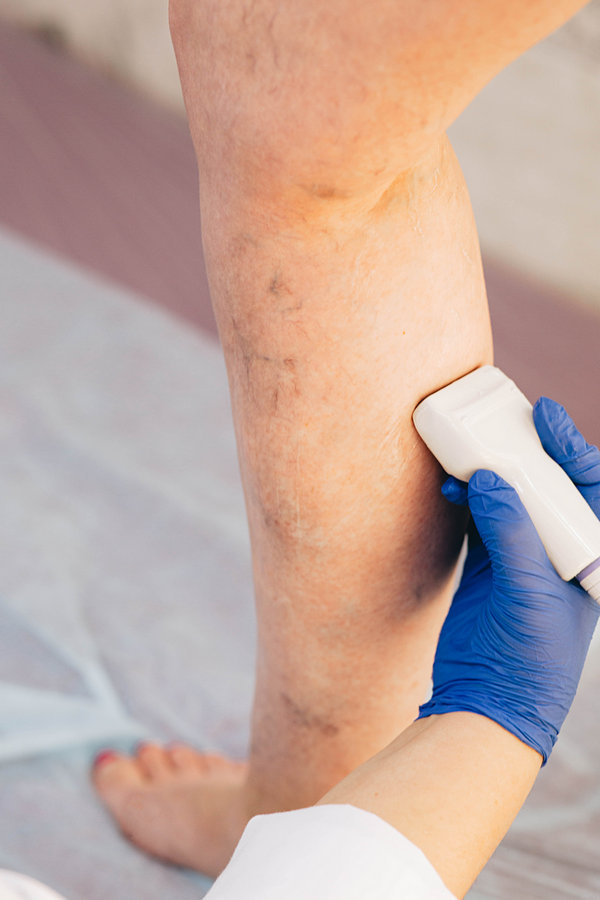
- Doppler ultrasound of veins – assessment of blood flow and condition of venous valves,
- Duplex examination – comprehensive evaluation of deep and superficial veins,
- Clinical examination – assessment of the severity of varicose veins according to the CEAP classification,
- Laboratory tests – determination of coagulation parameters, D-dimers in the diagnosis of thrombosis,
- Capillaroscopy – assessment of microcirculation and condition of capillaries.
Conservative treatment in phlebology
Therapy is selected individually according to the patient’s needs and the type of condition.
Pharmacotherapy:
- Phlebotropic drugs – which strengthen vessel walls and improve venous circulation,
- Anticoagulants – for the prevention and treatment of deep vein thrombosis,
- Topical preparations – ointments and gels that relieve the symptoms of venous insufficiency,
- Drugs to promote healing of venous ulcers.
Compression therapy:
- Individual selection of stockings and compression tights,
- Compression bandaging in the treatment of varicose veins and ulcers,
- Education on the proper use of compression.
Supportive therapy:
- Lymphodrainage – to promote lymph drainage and reduce swelling,
- Physiotherapy – exercises to improve venous circulation and prevent stasis,
- Lifestyle modification – recommendations for physical activity and posture.
Invasive treatment in phlebology
Modern methods of treating varicose veins allow the effective removal of vascular lesions with minimal discomfort for the patient.
Sclerotherapy:
- Injection closure of varicose veins and vascular spider veins,
- Administration of a special sclerosing agent directly into the affected vessel,
- A method that is effective, safe and requires no recovery time,
- Foam sclerotherapy – an advanced technique for treating larger varicose veins,
- Visible cosmetic results as soon as a few weeks after treatment.
Monitoring and prevention
Vein diseases often develop asymptomatically, so regular checkups are key to preventing serious complications.
At CARELIFE CLINIC, we offer preventive programs, including:
- Early diagnosis of venous insufficiency and thrombosis,
- Screening in people with family history and at-risk groups,
- Controls for patients with chronic venous diseases.