


Fractional CO2 Laser in Warsaw
Fractional CO2 laser treatment is an ablative resurfacing procedure in which a beam of light creates a grid of microscopic thermal columns in the skin, leaving patches of intact tissue between them to support healing. The procedure is used to improve skin texture, reduce the appearance of acne scars, and minimize the visibility of enlarged pores, fine lines, and certain skin irregularities.
+340 Satisfied Patients
+12 Specialists on the team
+2,400 Procedures per year
+15 Years of experience
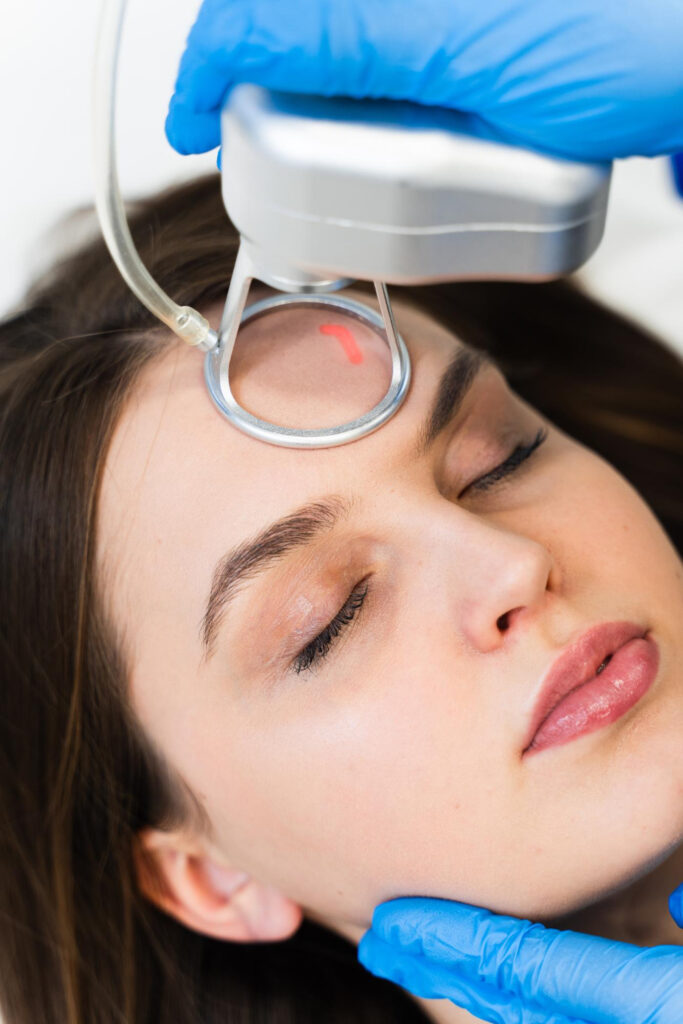
Fractional CO2 Laser in Warsaw
The fractional CO2 laser is used for controlled renewal of the epidermis and dermis. The treatment can improve skin texture, reduce the appearance of acne scars, minimize the visibility of enlarged pores, and smooth out fine lines. It is also used for certain types of scars and stretch marks on the body.
The intensity of the procedure is tailored to the type of skin condition, phototype, and acceptable healing time. Gentle resurfacing and the treatment of deep scars require different settings for energy, microbeam density, and the number of passes. The more intense the procedure, the longer the recovery period is usually.
What is the
fractional CO2 laser at CARELIFE CLINIC?
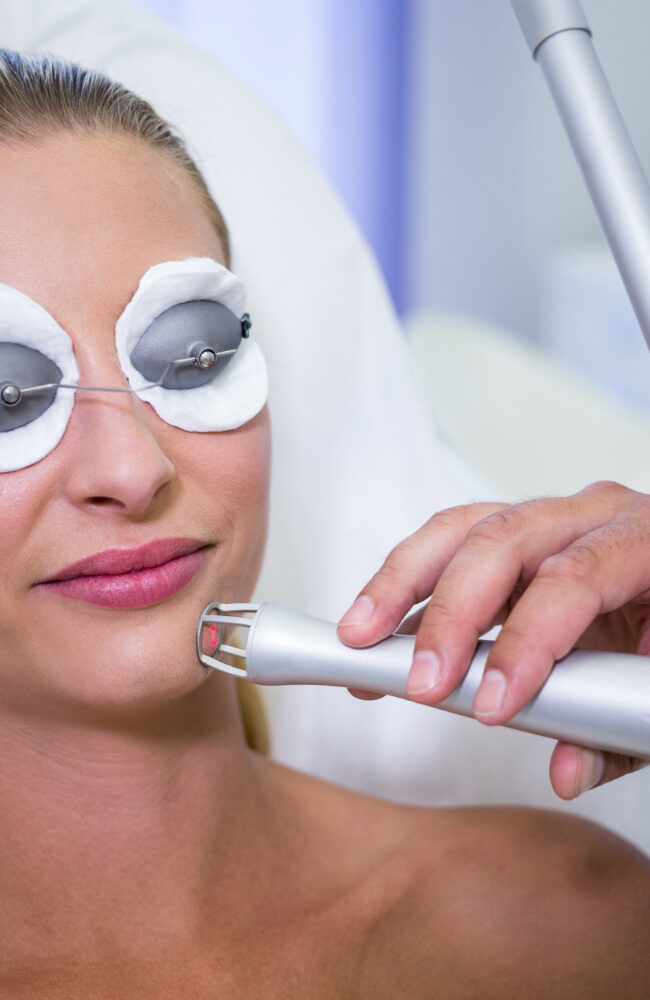
Fractional CO2 laser treatment is a laser therapy procedure designed to promote controlled skin remodeling. The laser beam creates micro-injuries in the skin, leaving areas of healthy tissue between them, which supports the healing and regeneration process. As a result, the treatment can improve the skin’s structure, firmness, and smoothness, as well as stimulate collagen production.
The fractional CO2 laser is used, among other things, to treat acne scars, enlarged pores, fine wrinkles, uneven skin texture, photoaging, and certain types of hyperpigmentation. This procedure requires proper qualification and a recovery period; therefore, the treatment parameters are tailored individually to the skin condition, the treatment area, and the desired outcome.
We’re open 7 days a week!
How does a CO2 laser work on the skin?
The laser beam creates controlled columns of ablation in the skin, surrounded by a thermal zone. Damaged cells are gradually replaced by new ones, and the repair process leads to the reorganization of collagen fibers.
The superficial effect is responsible for epidermal renewal, smoothing the skin’s texture, and partially reducing superficial irregularities. The thermal effect in the dermis stimulates long-term collagen remodeling, allowing improvements to continue even after visible healing has completed.
Who is the fractional CO2 laser treatment intended for?
The treatment is intended for adults with visible changes in skin structure that cannot be adequately corrected through skincare alone or with mild procedures. The most common patients are those with acne scars, enlarged pores, uneven skin texture, fine wrinkles, and signs of photoaging.
The CO2 laser can also be used for certain types of traumatic, post-surgical, and post-burn scars, as well as for stretch marks. Eligibility is determined by the type of skin condition, skin phototype, tendency toward hyperpigmentation, overall health, and the patient’s ability to follow post-treatment care instructions.
Fractional CO2 Laser in Warsaw - Price List
Laser Skin Rejuvenation – SMAXELL CO2 Fractional Laser
- Face – 1,400 PLN
- Face and neck – 1,700 PLN
- Face + neck + décolleté – 2,200 PLN
Are you thinking about choosing a service?
We can help you
We’re open 7 days a week!
Pre-procedure consultation
During the consultation, the following are assessed: skin phototype, skin thickness, type of scars, wrinkle depth, active lesions, and susceptibility to post-inflammatory hyperpigmentation. The specialist asks about previous reactions to treatments, herpes, keloids, chronic diseases, medications being taken, and current skincare routine.
Of particular importance are retinoids, isotretinoin, steroids, medications that affect blood clotting, and photosensitizing preparations and herbs. Suspicious skin lesions must also be ruled out before the procedure. Laser treatment should not be performed solely on the basis of a submitted photograph without a skin evaluation.
Indications for Fractional CO2 Laser Treatment
The most common indications include:
- – atrophic acne scars,
- – postoperative and post-traumatic scars,
- – selected burn scars,
- – uneven or rough skin texture,
- – enlarged pores,
- – fine lines around the eyes and mouth,
- – loss of firmness and signs of photoaging,
- – superficial uneven skin tone,
- – stretch marks,
- – deterioration in the quality of the skin on the face, neck, décolletage, or hands.
Laser treatment does not remove every skin condition and is not always the first step in treatment. Active acne, melasma, hypertrophic scars, and deep skin lesions require a separate evaluation.
Doctors performing fractional CO2 laser treatments at Carelife Clinic
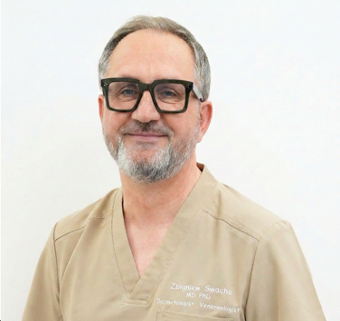


Fractional CO2 laser treatments at CareLife Clinic are performed by doctors with expertise in laser therapy, healing processes, and the diagnosis of skin lesions. The specialist selects the power, microbeam density, and number of passes, taking into account the patient’s phototype, skin thickness, and the risk of hyperpigmentation. Proper patient selection is particularly important for deep scars, melasma, darker skin types, and skin prone to abnormal healing.
Fractional CO2 Laser in Warsaw’s Ochota District—Treatment at CareLife Clinic
CareLife Clinic is located at 3 Józefa Siemieńskiego Street in Warsaw’s Ochota district. The clinic is accessible from the areas around the Hale Banacha, Banacha, Wiślicka, Dickensa, and Bitwy Warszawskiej 1920 r. bus stops. Patients arriving by car can use the private parking lot with 30 spaces.
Before laser therapy, a specialist evaluates the skin, assesses the condition, and selects parameters based on the patient’s phototype and the expected extent of resurfacing. The patient receives detailed instructions regarding preparation, healing, and post-treatment care. Appointments are also available on Saturdays and Sundays.
CO₂ Laser for Acne Scars
A fractional CO2 laser can reduce atrophic acne scars through controlled ablation and collagen remodeling. Over time, the edges of the indentations become smoother, and the skin’s surface becomes more even. The results typically improve with subsequent treatments.
Effectiveness depends on the type of scar. Wider rolling and boxcar scars may respond differently than deep, narrow ice-pick scars. Scars that are adhered to the underlying tissue may require prior release, and isolated deep depressions may require the use of an additional method. Laser treatment improves the appearance of scars, but in most cases does not remove them completely.
Fractional CO2 laser for enlarged pores and uneven skin texture
Enlarged pores are associated with, among other things, the structure of the sebaceous glands, sebum production, loss of elasticity, and a history of acne. The laser does not permanently close the pores, but through skin resurfacing and remodeling, it can significantly reduce their visibility.
The treatment also helps with superficial unevenness, roughness, and post-inflammatory marks. The final result depends on the severity of the problem and the parameters set. For mild changes, a gentler procedure is sufficient, while skin with numerous scars may require several more intensive sessions.
CO₂ Laser for Wrinkles, Sagging, and Photoaging of the Skin
The fractional CO2 laser is used to treat fine and medium-depth wrinkles, particularly around the mouth and eyes. Skin resurfacing and gradual collagen remodeling can improve the skin’s smoothness, thickness, and firmness.
The treatment is also effective for photoaging, which manifests as roughness, loss of elasticity, and uneven texture. However, it does not restrict muscle movement or restore lost volume. Deep expression lines, significant excess skin, or tissue sagging may require other methods.
Fractional CO2 Laser for Discoloration and Skin Tone Improvement
Resurfacing can remove some of the epidermal cells containing excess pigment; therefore, in appropriately qualified patients, it is possible to improve skin tone and reduce certain superficial discolorations. However, it is not a universal laser for all pigmented lesions.
Melasma and post-inflammatory hyperpigmentation require special caution, as intense treatment can trigger inflammation and secondary worsening of pigmentation. If the main concern is sunspots, erythema, or telangiectasia, Lumecca or another technology targeting melanin and hemoglobin may be a better choice.
CO2 Laser for Stretch Marks and Scars on the Body
A fractional laser can be used to treat stretch marks located on the abdomen, thighs, buttocks, and arms, among other areas. Controlled micro-injuries are intended to stimulate the remodeling of the affected tissue, gradually reducing the width and visibility of the stretch marks.
A similar mechanism is used for certain types of postoperative, traumatic, and burn scars. A fresh scar requires an assessment of its healing status, and patient eligibility is determined on a case-by-case basis. The laser does not completely remove the scar, but it can improve its color, elasticity, surface texture, and the transition between the scar and the surrounding skin.
Fractional CO₂ Laser for the Face, Neck, and Décolletage
On the face, the laser can treat the entire skin surface or a specific area, such as the cheeks, forehead, or the areas around the mouth or eyes. During a full-face treatment, the parameters may vary between different areas due to differences in skin thickness.
The neck and décolletage have thinner skin and fewer glands that support epidermal regeneration. For this reason, they require gentler settings and more careful treatment. The intensity used on the cheeks does not automatically apply to the neck, eyelids, or décolletage.
CO2 Laser and Active Acne—When Is Treatment Needed First?
The CO2 laser is primarily used on acne scars, not on active pimples, nodules, or pustules. Performing the procedure on severe inflammation may increase the risk of infection, impair healing, and lead to the formation of additional scars.
The first step is to bring active acne under control, determine its cause, and establish an appropriate treatment plan. Resurfacing can be performed once the skin is stable and free of numerous inflammatory lesions. Isolated blackheads do not always preclude the procedure, but the decision is made by a specialist during the consultation.
Fractional CO2 Laser vs. Morpheus8, Lumecca, and Microneedle RF
CO2 laser treatment is an ablative procedure—it affects the epidermis and deeper layers of the skin and causes visible peeling. It is effective for scars, pores, wrinkles, and uneven skin texture, but requires several days to a couple of weeks of recovery.
Morpheus8 is a microneedle radiofrequency technology. It delivers RF energy through microneedles placed at a selected depth and does not perform the same type of epidermal resurfacing. It may be a better choice for skin laxity and when deeper skin remodeling is needed, with a shorter peeling period.
Lumecca is not a CO2 laser but an IPL technology. It acts primarily on pigment and hemoglobin, which is why it is used for hyperpigmentation, erythema, and vascular lesions. It does not replace an ablative laser in the treatment of deep scars and skin texture.
CO₂ Laser vs. PRP, Mesotherapy, and Tissue Stimulators
The CO2 laser is a device-based procedure that performs ablative resurfacing. PRP, mesotherapy, and tissue stimulators are injection-based procedures that do not remove layers of the epidermis and do not create laser treatment columns.
Platelet-rich plasma can be used as part of regenerative therapy, and mesotherapy helps improve skin hydration once the healing process is complete. Stimulators are primarily used to gradually improve tissue density and quality. These methods can be combined, but the order and intervals must be determined by a doctor.
How should you prepare for fractional CO2 laser treatment?
For at least a few weeks before the procedure, avoid sunbathing, tanning beds, and self-tanning products. The skin must not be freshly tanned or sunburned. About 5–7 days before the appointment, as recommended by the specialist, you should generally discontinue the use of exfoliants, high-concentration acids, and cosmetics containing retinoids.
Inform your doctor about all medications and supplements you are taking. Do not stop anticoagulant therapy, steroid therapy, or isotretinoin treatment on your own. If you have recurrent herpes, antiviral prophylaxis may be recommended. On the day of the procedure, your skin should be clean, free of makeup, irritation, and fresh lesions.
How is the CO2 laser treatment performed?
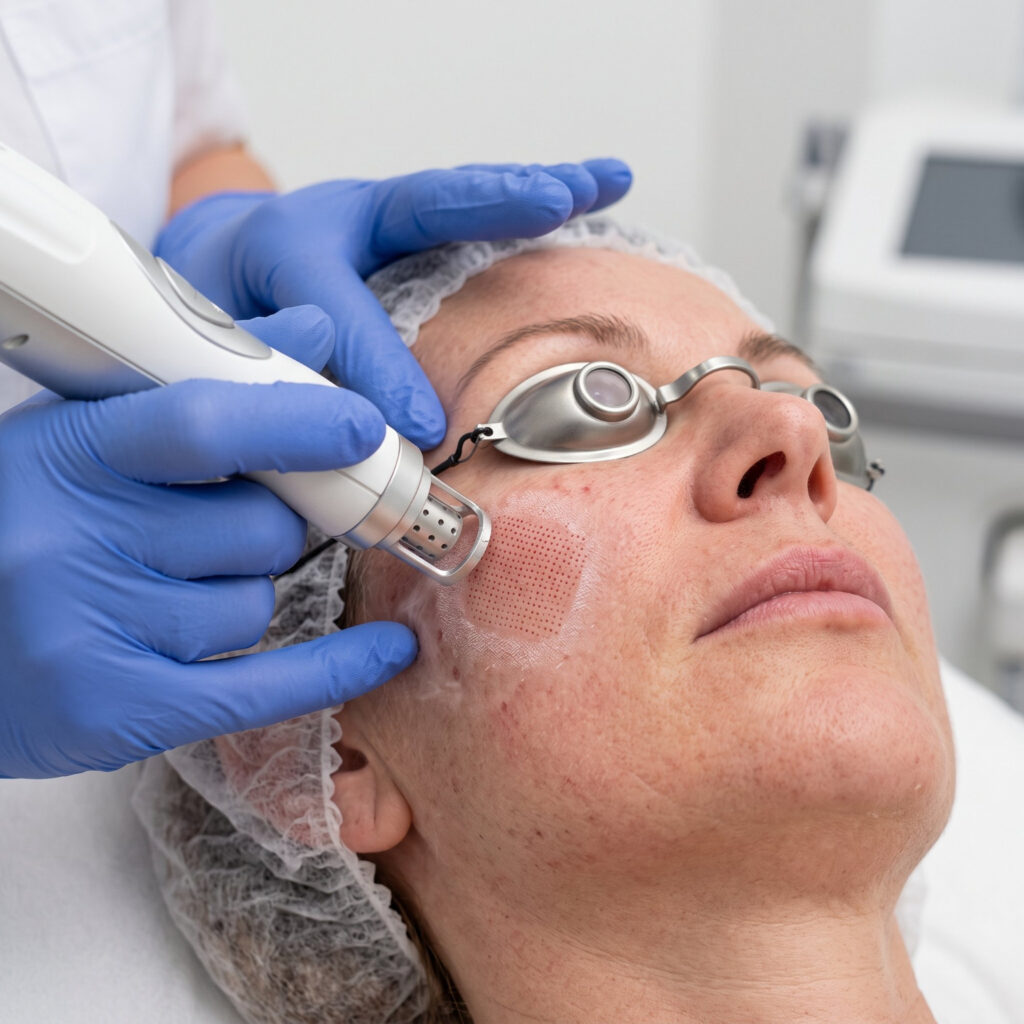
After the consultation, the skin is cleansed and disinfected. An anesthetic cream is applied to the treatment area, where it typically remains for about 30–60 minutes. The patient’s eyes are protected with appropriate shields.
The doctor selects the pulse power, pulse duration, microbeam density, and number of passes. The handpiece is moved evenly across the planned area, and the laser creates a grid of microscopic ablation points. The procedure itself usually takes 20 to 60 minutes. The entire visit, including anesthesia and skin protection, may take about 60–120 minutes.
Does fractional CO2 laser treatment hurt?
An anesthetic cream reduces the sensation but does not always eliminate it completely. During the procedure, the patient may feel warmth, a pinching sensation, or brief pulses resembling pricks. The intensity of the discomfort depends on the settings and the area being treated.
After the procedure, a burning sensation similar to that of a sunburn may occur. It is usually most intense in the first few hours and then gradually subsides. Severe or worsening pain in the following days is not a typical reaction and requires contacting the clinic.
Recovery After CO2 Laser Treatment
Recovery time depends on the intensity of the treatment, the treatment area, and the individual’s healing rate. After a milder resurfacing treatment, visible symptoms may last about 5–7 days. After a more intensive procedure, recovery may take 10–14 days, and redness may persist longer.
Common symptoms include swelling, a burning sensation, redness, pinpoint oozing, browning of the skin, and peeling. The new skin is initially pink, thin, and more sensitive to light and cosmetics. Do not try to speed up the peeling process or cover unhealed areas with makeup.
Skin Healing After Fractional Laser Treatment, Day by Day
The healing process may vary depending on the treatment parameters, but it typically proceeds as follows:
- Day of the procedure: The skin is intensely red, warm, and swollen. Minor pinpoint oozing may occur.
- Days 1–2: Swelling may worsen, especially around the eyes. A regular grid of post-treatment spots may be visible.
- Days 3–5: The skin darkens, becomes rough, and begins to peel. Itching and a feeling of tightness may occur.
- Days 5–7: Most of the superficial scabs fall off on their own, revealing pink skin.
- Days 7–14: The skin gradually regains an even appearance, but may remain red and sensitive.
- Subsequent weeks: The redness subsides, and collagen remodeling leads to a gradual improvement in skin texture.
Makeup may be applied only after the skin has healed and with the specialist’s approval—often after about 5–7 days, and later following a more intensive treatment.
When are the results of CO2 laser treatment visible?
The first change can be noticed once the peeling process is complete, when the skin’s surface becomes smoother and more even. A more comprehensive assessment of a single treatment is usually possible after about 4–8 weeks.
Collagen remodeling takes significantly longer than epidermal healing. Improvements in skin firmness and the appearance of scars may develop gradually over several months, and the tissue reorganization process can last as long as 6–12 months. The results depend on the depth of the lesions, the treatment parameters, and the number of sessions performed.
How many fractional CO2 laser treatments are needed?
In cases of moderate photoaging or mild resurfacing, improvement may be visible after a single session. However, a series of 2–3 treatments is most commonly performed. Deeper acne scars, stretch marks, and extensive skin irregularities may require 3–5 procedures or combination therapy.
The intervals between treatments are usually about 6 to 12 weeks, to allow the skin to heal and begin collagen remodeling. The next treatment should not be scheduled solely based on a calendar—it is necessary to assess the skin’s response and the results of the previous session.
Post-Treatment Recommendations for CO₂ Laser Treatment
After the procedure, use cleansing, regenerating, and protective products recommended by a specialist. The skin should remain clean and properly protected, but do not use random ointments, antibiotics, or steroid-based products.
Basic recommendations include:
- not touching the skin with unwashed hands,
- do not pick at scabs or peeling skin,
- using SPF 50 sunscreen once the skin has healed,
- avoiding the sun for at least 4 weeks,
- refraining from saunas, swimming pools, and intense exercise until the skin has healed,
- do not use retinoids, acids, exfoliants, or alcohol in cosmetics,
- Do not undergo any other treatments without your doctor’s consent,
- change to a clean pillowcase and use a separate face towel.
It’s a good idea to use sun protection every day even after the first month is over, because the new skin is prone to discoloration.
Contraindications for fractional CO2 laser treatment
The most important contraindications include:
- pregnancy and breastfeeding,
- a recent tan or sunburn,
- active herpes and other skin infections,
- active, severe inflammatory acne,
- open wounds and impaired healing,
- active psoriasis, atopic dermatitis, or other skin conditions at the treatment site,
- a tendency toward keloids,
- uncontrolled diabetes and other conditions that impair regeneration,
- active cancer treatment,
- use of certain photosensitizing medications,
- inability to follow post-treatment recommendations.
Isotretinoin, steroids, anticoagulant therapy, immunosuppression, and autoimmune diseases require individual evaluation. Do not discontinue medications on your own.
Possible side effects and warning signs
Redness, swelling, burning, pinpoint oozing, scabs, and peeling are expected parts of the healing process. Temporary itching, dryness, worsening of acne, or the development of milia are also possible.
Complications include bacterial, viral, or fungal infections; prolonged erythema; post-inflammatory hyperpigmentation; hypopigmentation; and scarring. The following conditions require immediate contact with the clinic:
- pain that gets worse instead of gradually subsiding,
- purulent discharge or an unpleasant odor,
- fever and feeling unwell,
- rapidly spreading redness,
- large blisters, darkening, or necrosis of the skin,
- clusters of painful blisters that may indicate herpes,
- significant swelling that makes it difficult to open the eyes,
- sudden vision problems.
Early contact allows for faster implementation of appropriate treatment.
Fractional CO2 Laser in Warsaw’s Ochota District - FAQ
Before undergoing laser therapy, patients most often ask about healing time, when they can return to work, pain, and the number of treatments required. Below, we answer the most important questions about fractional CO2 laser skin resurfacing.
How many days do you need to stay home after CO2 laser treatment?
After a mild resurfacing treatment, the most noticeable symptoms usually last 5–7 days. After a more intensive treatment, peeling and redness may require about 10–14 days of recovery.
When can I apply makeup?
You can apply makeup only after the epidermis has closed and the drainage has stopped. This is usually possible after about 5–7 days, but after an intensive procedure, you should wait longer.
Does CO2 laser treatment completely remove acne scars?
Laser treatment can significantly reduce the appearance of scars and smooth out the skin, but it usually does not remove them completely. Deep or embedded scars may require additional treatments.
Can fractional CO2 laser treatment be performed in the summer?
It is safest to schedule the procedure during a period of limited UV exposure. The procedure may be performed in the summer only if the patient has no tan and can adhere to strict sun protection measures.
Is one treatment enough?
With gentle resurfacing, a single session can produce noticeable improvement. Treatment of deep scars, stretch marks, and extensive skin irregularities usually requires a series of sessions.
How does the CO2 laser differ from Morpheus8?
The CO2 laser performs ablative resurfacing of the epidermis and dermis, which is why it causes significant peeling. Morpheus8 delivers RF energy via microneedles and is typically associated with less ablation of the skin’s surface.