


Treatment for Hyperhidrosis in Warsaw
Excessive sweating of the armpits, hands, or feet can interfere with work, physical activity, and daily interactions. Botulinum toxin locally blocks the transmission of nerve signals that stimulate sweat glands, thereby significantly reducing sweat production in the treated area. At CareLife Clinic in Warsaw, the procedure is preceded by a medical consultation and a precise assessment of the area affected by hyperhidrosis.
+340 Satisfied Patients
+12 Specialists on the team
+2,400 Procedures per year
+15 Years of experience
Botulinum Toxin Treatment for Hyperhidrosis in Warsaw
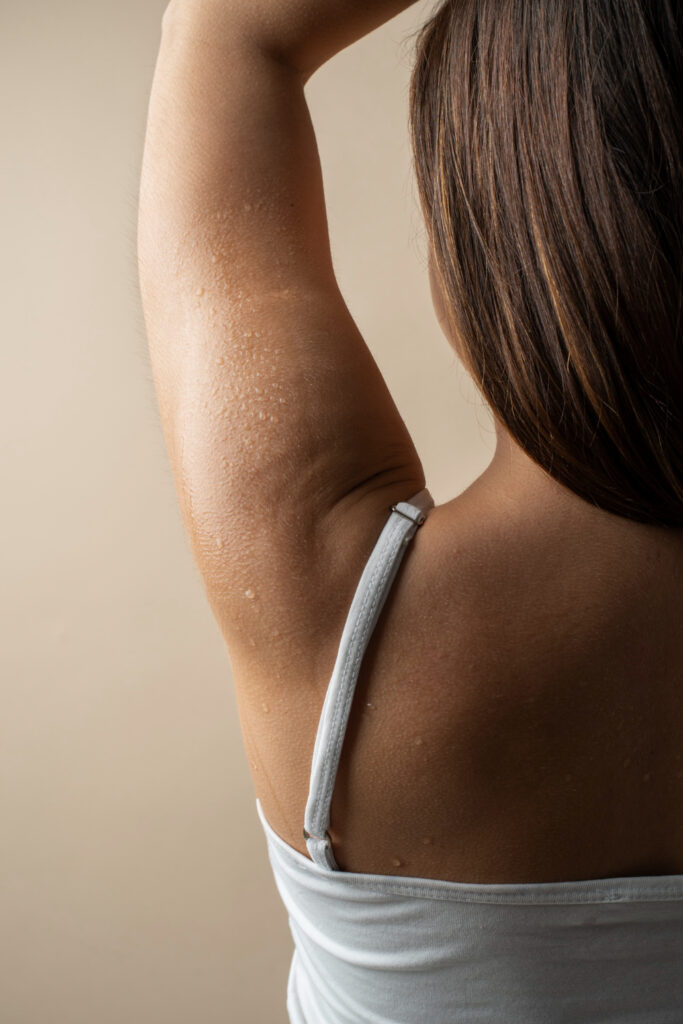
Botulinum toxin allows for localized and temporary reduction of sweat production in areas such as the armpits, palms, soles, forehead, and scalp. The product is administered intradermally at a series of precisely spaced points. Its purpose is to block the nerve signals that stimulate the sweat glands—without surgically removing them.
The treatment is primarily intended for people whose excessive sweating hinders daily functioning, causes visible stains on clothing, makes it difficult to hold objects, causes feet to slip in shoes, or leads to recurring skin irritation. At Care Life Clinic, the procedure is preceded by a medical consultation, an assessment of the cause of the problem, and the selection of the treatment area and dosage.
When does excessive sweating require treatment
at CARELIFE CLINIC?
It is worth considering a consultation if sweating occurs regularly for no apparent reason, forces you to change your clothes several times a day, interferes with manual work, or causes you to avoid social interactions and situations. Another indication may be a lack of improvement despite the use of aluminum chloride antiperspirants and proper hygiene.
Sweating that appears suddenly, affects the entire body, or occurs primarily at night requires specific diagnostic evaluation. It should not be taken lightly if it is accompanied by fever, heart palpitations, hand tremors, significant weakness, unintentional weight loss, or other systemic symptoms. In such cases, the cause must first be determined before considering symptomatic treatment.
We’re open 7 days a week!
What is hyperhidrosis?
Sweating is a natural mechanism of thermoregulation. We refer to hyperhidrosis when the body produces more sweat than is necessary to maintain a normal body temperature. The problem can occur regardless of heat, physical exertion, or thick clothing. It most commonly affects the armpits, hands, and feet, but can also involve the face, forehead, scalp, or a larger area of the body.
Hyperhidrosis can lead to damp clothing, difficulty shaking hands, handling a phone or documents, slipping feet, and skin maceration. Frequent skin moisture also increases susceptibility to irritation and certain infections. Sweat itself is almost odorless—the unpleasant odor is mainly caused by bacteria present on the skin.
Primary and secondary hyperhidrosis—how do they differ?
Primary hyperhidrosis is usually localized and symmetrical. It most commonly affects both armpits, palms, or soles of the feet; it begins in childhood or early adulthood and worsens under stress or emotional arousal. It is typical for symptoms to occur at least once a week, for there to be a family history of a similar problem, and for there to be no increased sweating during sleep.
Secondary hyperhidrosis results from another medical condition, hormonal changes, or the effects of medications. It may accompany, among other conditions, thyroid disorders, hypoglycemia, menopause, infections, neurological diseases, or the use of certain antidepressants, antipyretics, and hormonal medications. It more often affects a larger area of the body and may also occur at night. In such cases, the key is to diagnose and treat the underlying cause.
Hyperhidrosis Treatment in Warsaw - Price List
Botulinum Toxin – Treatment for Hyperhidrosis
- Treatment for excessive sweating (underarms / hands / feet) – 2,200 PLN
Are you thinking about choosing a service?
We can help you
We’re open 7 days a week!
Consultation and Screening for the Procedure
The evaluation begins with a medical history interview regarding the duration of the problem, areas of excessive sweating, nighttime symptoms, chronic conditions, and medications currently being taken. The doctor also asks about previous treatments, botulinum toxin procedures, and any reactions to medications or anesthetics.
If symptoms may indicate secondary hyperhidrosis, internal medicine, dermatology, or endocrinology evaluations may be needed before the procedure. The doctor also examines the skin to rule out infections, wounds, and active inflammation. Next, the doctor determines the treatment area, the approximate number of injection sites, the method of anesthesia, and the dosage of the preparation.
How does botulinum toxin affect the sweat glands?
Sweat glands are stimulated by nerve fibers that use acetylcholine. Botulinum toxin temporarily blocks the release of this neurotransmitter at the injection site. As a result, the glands in the treated area receive fewer stimulating signals and secrete significantly less sweat.
The effect is localized and reversible. The treatment does not remove the glands or cure the underlying cause of hyperhidrosis. In the months following treatment, the nerve endings regain their ability to transmit impulses, so sweating gradually returns. The treatment can then be repeated after another medical evaluation.
Who is this hyperhidrosis treatment for?
The treatment is intended for people with localized hyperhidrosis of the underarms, palms, soles, or other selected areas, especially when antiperspirants and at-home methods do not provide sufficient improvement. It may be considered both for visible sweating and when damp skin causes professional, social, or athletic problems, or recurrent skin irritation.
Botulinum toxin should not be used as a substitute for diagnostic evaluation in cases of sudden or generalized sweating. Before the procedure, the doctor determines whether the symptoms are primary in nature or may result from an underlying medical condition or medications the patient is taking. The doctor also assesses the condition of the skin, previous treatments, the patient’s expectations, and any potential contraindications.
Doctors treating hyperhidrosis at Carelife Clinic



A botulinum toxin treatment is performed by a physician who is qualified and experienced in injection procedures. The physician’s role is not only to administer the medication but also to determine whether the sweating is localized and whether it requires prior internal medicine, dermatology, or endocrinology evaluation.
The physician selects the dose, injection depth, and placement of injection sites for the specific area. This is particularly important for the hands, feet, and forehead, where injections that are too deep or improperly placed may increase the risk of the product affecting nearby muscles.
Hyperhidrosis Treatment in Warsaw’s Ochota District — Treatment at Care Life Clinic
Care Life Clinic is located at 3 Józefa Siemieńskiego Street in Warsaw’s Ochota district. The clinic has a private parking lot with 30 spaces and is open seven days a week. Treatment for hyperhidrosis begins with a consultation, during which the doctor assesses the nature of the problem and rules out causes that would require a different course of treatment.
On-site, the patient can undergo a qualification assessment, have the area of excessive sweating marked, and receive the botulinum toxin treatment. After the procedure, the patient receives specific recommendations regarding hygiene, physical activity, and the date for a follow-up evaluation.
Treatment of underarm hyperhidrosis
The underarms are the most commonly treated area. Hyperhidrosis can cause large, visible stains on clothing, necessitate frequent changes of clothes, and force patients to avoid certain colors and fabrics. The treatment covers both underarms, and the treatment area can be marked in advance using the Minor test.
The product is administered intradermally at evenly spaced points, typically about 1–2 cm apart. For certain products, for example, 50 units are used per armpit; however, the units of different products are not interchangeable. The final dose is determined by the doctor. Initial improvement usually occurs within a week, and the average duration of effect in the underarm area is about 6–8 months.
Treatment of Excessive Hand Sweating
Excessive sweating of the hands can make it difficult to write, use electronic devices, drive a car, handle tools, and shake hands. The toxin is injected into multiple sites on the palm and—if the extent of the problem requires it—also in the area around the fingers.
The hands are more sensitive than the armpits, which is why an anesthetic cream, cooling, or another form of local anesthesia is more commonly used. A possible side effect is temporary weakness of the grip or thumb strength, which is why the procedure requires precise, superficial administration of the medication. The effect usually lasts about 4–6 months, although this duration may vary from person to person.
Treatment of Excessive Foot Sweating
Excessive foot sweating can cause the foot to slip inside shoes, maceration of the skin, chafing, and increased susceptibility to infections. Moist skin also promotes the development of a strong odor, which is primarily caused by microorganisms that break down sweat components.
The solution is administered intradermally at a series of points on the sole of the foot and—depending on the problem—in the area around the toes. The skin on the soles is thick and highly innervated, so the procedure may be more noticeable than treatment of the armpits. For this reason, appropriate anesthesia is planned. The effects usually last for several months, most commonly about 4–6 months.
Treatment of excessive sweating of the forehead and scalp
Botulinum toxin can also be used to treat localized hyperhidrosis of the forehead or the scalp. This condition can cause sweat to run down the face, make applying makeup difficult, and lead to oily hair. However, these areas require particularly careful evaluation.
On the forehead, the product must be administered in such a way as to reduce sweating without excessively affecting the muscles responsible for facial expressions and eyebrow position. Possible side effects include temporary asymmetry, drooping of the eyebrows, or drooping of the eyelids. Not every product has the same range of approved indications, so a doctor determines whether the procedure can be performed.
The Minor Test—How Is the Area of Excessive Sweating Determined?
The Minor test, also known as the iodine-starch test, helps precisely identify the areas with the highest sweat gland activity. An iodine solution is applied to clean, dry skin, and once it dries, the area is dusted with starch. When it comes into contact with sweat, the starch and iodine form a dark navy blue or black discoloration.
Based on the results, the doctor marks the boundaries of the treatment area and identifies the injection sites. The test is particularly useful for the underarms, since the area of excessive sweating does not always correspond exactly to the hair-bearing area. Iodine can stain clothing, so it’s a good idea to wear a dark T-shirt to your appointment.
Post-Treatment Recommendations for Hyperhidrosis
For the first 24 hours, do not massage, apply pressure to, or vigorously rub the treated area. It’s best to avoid using antiperspirant or deodorant until the next day, especially if injection marks are visible. Keep the skin clean and avoid touching it with dirty hands.
For 24–48 hours, it is recommended to avoid intense exercise, saunas, swimming pools, tanning beds, hot baths, and alcohol. After hand and foot treatments, it is advisable to limit activities that cause significant friction and pressure. Individual recommendations may vary depending on the treatment area and the type of anesthesia used.
Recovery and Return to Daily Activities
Treatment of hyperhidrosis with botulinum toxin does not typically require time off from work or several days of recovery. After the procedure, you can resume your normal daily activities. Small dots, redness, or slight bumps may be visible on the skin, but these usually disappear within a few hours.
Occasionally, small bruises or tenderness may occur and last for a few days. It’s best to wait 24–48 hours before returning to exercise, swimming, or using the sauna, provided the skin is not irritated. After hand treatment, driving or performing precise manual tasks may be temporarily less comfortable due to numbness or tenderness at the injection sites.
Contraindications for the treatment of hyperhidrosis with botulinum toxin
The procedure is not performed during pregnancy or breastfeeding, in the presence of an active infection or inflammation of the skin at the injection site, or in cases of known hypersensitivity to the product’s ingredients. Certain conditions that impair neuromuscular transmission, such as myasthenia gravis and Lambert-Eaton syndrome, are also contraindications.
Coagulation disorders, the use of anticoagulants, certain antibiotics—especially aminoglycosides—and other medications that affect muscle function and nerve conduction require special consideration. The patient should not stop taking any medication on their own. The doctor will determine whether the procedure can be performed after conducting a medical history interview.
Possible side effects after the procedure
The most common symptoms include localized pain, redness, swelling, small lumps, itching, bruising, or minor bleeding at the injection site. These are usually mild and resolve on their own. It is also possible that the reduction in sweating may be uneven or less pronounced than expected.
After treatment of the hands, temporary weakness of the grip may occur, while administration to the forehead area may cause temporary asymmetry or drooping of the eyebrow or eyelid. Difficulty breathing or swallowing, generalized muscle weakness, speech disorders, or symptoms of a severe allergic reaction require urgent medical attention. Such complications are rare, but the patient should be aware of the warning signs.
Treatment of Hyperhidrosis and Other Methods for Reducing Sweating
For milder symptoms, antiperspirants containing aluminum chloride may be the first line of treatment. For the hands and feet, iontophoresis is also used—a treatment that involves passing a low-intensity electrical current through water. This method usually requires a series of treatments followed by maintenance sessions.
A doctor may consider oral medications to reduce sweating, but these can cause side effects such as dry mouth, blurred vision, or constipation. Methods for destroying sweat glands using energy are also available, as well as surgical treatment, which is reserved for select, severe cases. Botulinum toxin acts locally and does not require surgery, but its effect is temporary.
Frequently Asked Questions About the Treatment of Hyperhidrosis with Botulinum Toxin
Below, we answer the most common questions about how botulinum toxin works, how to prepare for the procedure, how long the effects last, and what restrictions apply after the procedure. Final recommendations may vary depending on the treated area and the type of product used.
How should you prepare for hyperhidrosis treatment?
On the day of the procedure, the skin should be clean, dry, and free of antiperspirant, deodorant, cream, and other cosmetics. It is best to shave your underarms one or two days in advance, rather than immediately before your appointment—this reduces the risk of micro-injuries and skin irritation.
You should provide your doctor with a list of all medications you are taking, especially antibiotics, medications that affect neuromuscular transmission, and medications that increase the risk of bleeding. Do not stop taking them on your own. It’s also important to mention any infections, fever, pregnancy, breastfeeding, bleeding disorders, or neurological conditions. It’s best to avoid alcohol for 24 hours before your appointment.
How is the botulinum toxin injection procedure performed?
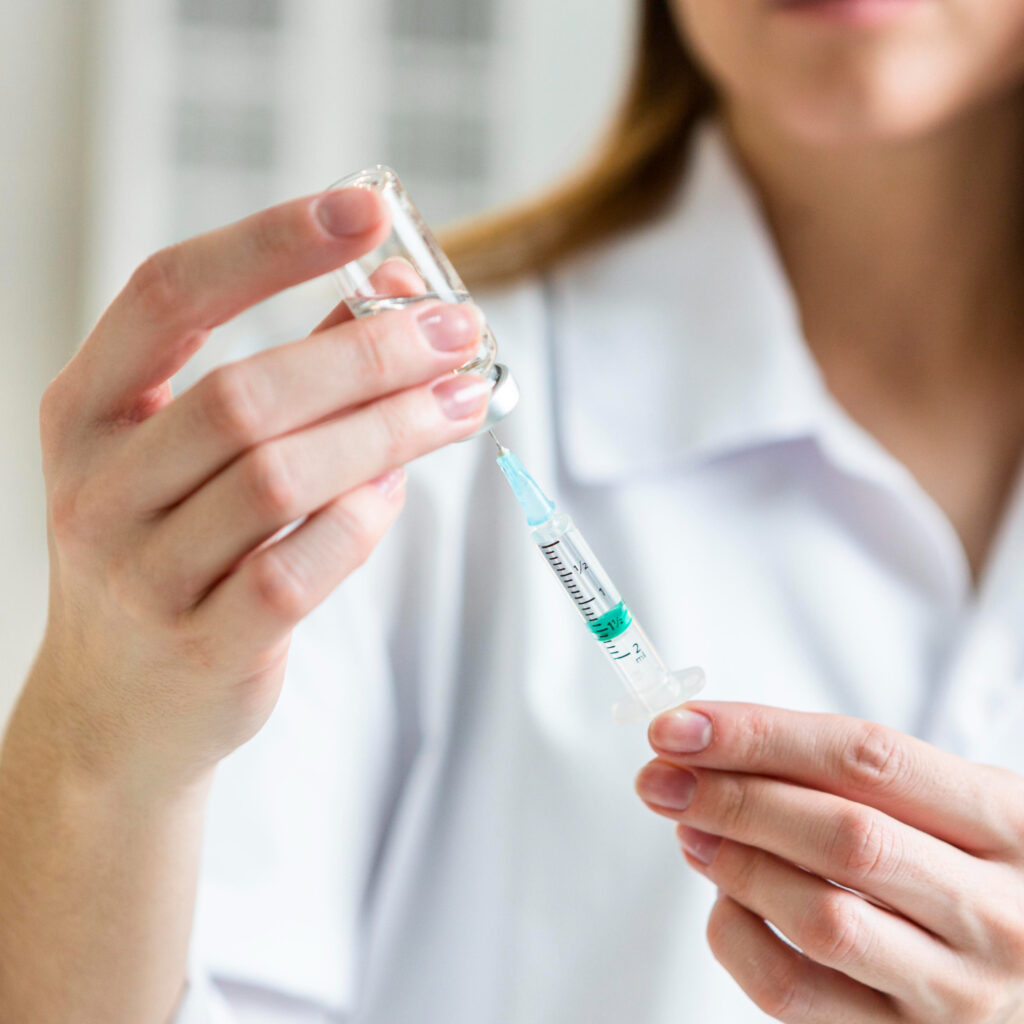
After the consultation, the doctor cleanses the skin, identifies the area of excessive sweating, and marks a grid of points. Depending on the location, an anesthetic cream, cooling, or another form of local anesthesia may be used. Then, using a very fine needle, small amounts of the solution are injected into the superficial layers of the skin.
The procedure involves a series of a dozen or so to several dozen injections. The injection of a single area usually takes about 15–30 minutes, while the entire visit—including the consultation, marking the treatment area, and anesthesia—may take 30–60 minutes. After the procedure, the patient receives post-treatment instructions and may leave the clinic.
Does hyperhidrosis treatment hurt?
Short stinging sensations and a slight burning sensation are most commonly felt in the armpits. The procedure is generally well tolerated, especially after applying an anesthetic cream or using a cooling agent. Immediately after the injection, small blisters resembling insect bites may be visible.
The palms of the hands and soles of the feet are more densely innervated, so the procedure in these areas may be more painful. Before beginning, the doctor will choose a method to minimize discomfort. The sensations during the procedure also depend on the number of injections, the size of the treated area, and the individual’s pain threshold.
When will I see the results of hyperhidrosis treatment?
The first reduction in sweating can be noticed after about 3–7 days. The effect develops gradually, so it is best to assess the final result after 10–14 days. During this time, you can check whether sweating has decreased evenly across the entire treated area.
The treatment is designed to reduce excessive sweating, but it does not always result in completely dry skin. The extent of improvement depends on the severity of the problem, the treatment area, the dose administered, and the individual’s response. If there are still clearly active areas after two weeks, the doctor can evaluate them during a follow-up visit.
How long does the dry skin effect last?
For the underarms, the effect lasts on average about 6–8 months, and in some patients it may last longer. For the hands and feet, the improvement often lasts about 4–6 months. These are approximate time frames—the effect may wear off sooner or later.
Sweating returns gradually as the nerve endings begin to send signals to the glands again. The nerve endings are not permanently destroyed. Another treatment can be scheduled when sweating once again begins to affect your daily comfort.
How often can the treatment be repeated?
The procedure is not performed according to a strict schedule. The next treatment is scheduled after the effects of the previous session have worn off and the indications have been reevaluated. In practice, many people undergo the procedure once or twice a year.
Subsequent treatments should not be performed at too short intervals. The minimum interval depends on the product used and the doctor’s recommendations; for underarm treatment, it is usually at least several months. Some patients schedule the procedure in the spring to ensure maximum comfort during the summer, but it can be performed year-round.