


Joint and Periarticular Block Warsaw
Are you experiencing pain in your knee, shoulder, hip, elbow, or ankle, and is the inflammation limiting your movement and making it difficult to go about your daily activities? At CareLife Clinic in Warsaw’s Ochota district, we perform joint and periarticular injections following an orthopedic evaluation. The doctor administers a tailored medication directly into the joint cavity or into the area surrounding the inflamed tendon, bursa, or joint capsule. The goal of the procedure is to reduce pain and inflammation. Depending on the indications and location, the injection may be performed under ultrasound guidance, which facilitates precise needle placement.
+340 Satisfied Patients
+12 Specialists on the team
+2,400 Procedures per year
+15 Years of experience
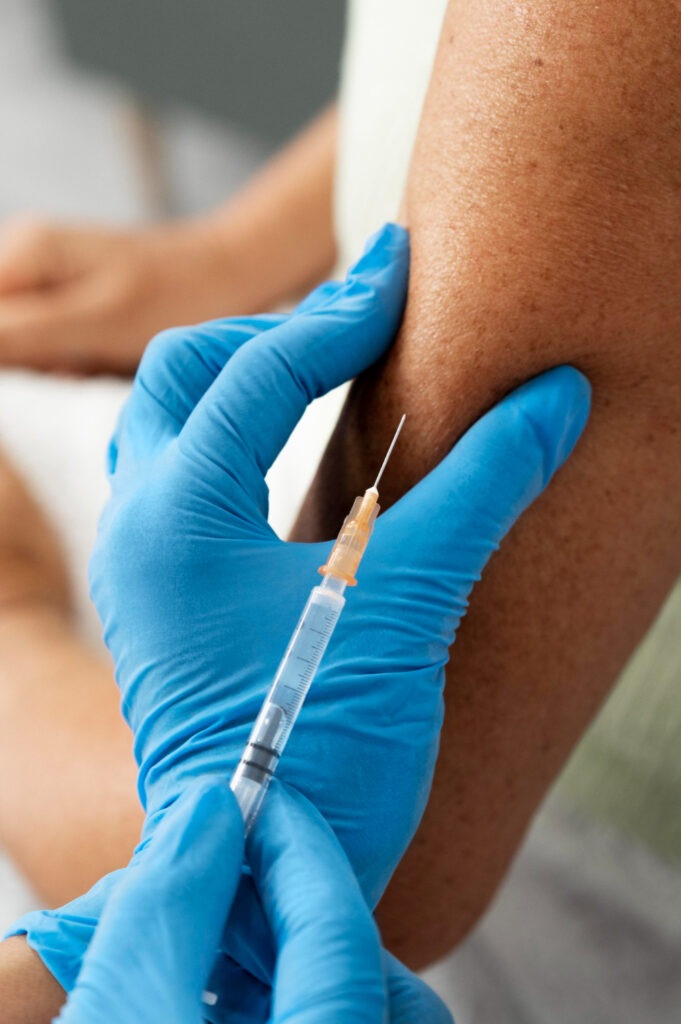
Intra-articular and periarticular injections in Warsaw
A nerve block may be part of the treatment for pain associated with inflammation of a joint or the surrounding tissues. At CareLife Clinic in Warsaw’s Ochota district, the procedure is performed by a doctor after assessing the cause of the symptoms. The medication can be injected into the joint, a bursa, a tendon sheath, or near a tendon insertion. The goal of the injection is to reduce pain and inflammation in order to make it easier to move, perform daily activities, and begin or continue rehabilitation.
What is the “
” joint block at CARELIFE CLINIC?
A joint block involves the local administration of medication to the area causing the symptoms. Most often, a glucocorticosteroid preparation is used, sometimes in combination with an anesthetic. The steroid reduces the inflammatory response, while the anesthetic can provide short-term pain relief immediately after the injection.
A joint block does not regenerate cartilage, repair a damaged ligament, or eliminate the mechanical cause of overuse. It is a symptomatic treatment that should be combined with an approach targeting the root cause of the problem, such as physical therapy, modifying activity levels, or treating the underlying condition.

Doctors performing intra-articular and periarticular injections at Carelife Clinic


At Carelife Clinic, patients are cared for by experienced and qualified orthopedic surgeons who specialize in the diagnosis and treatment of musculoskeletal problems. We combine medical knowledge, clinical experience, and a personalized approach to provide patients with effective and safe orthopedic care.
We’re open 7 days a week!
Intra-articular block vs. periarticular block—how do they differ?
In the case of an intra-articular injection, the needle is inserted into the joint cavity, and the medication is delivered directly into the joint. This method of administration is used, among other things, for synovitis, exacerbations of osteoarthritis, and pain associated with limited mobility.
A periarticular block involves the tissues surrounding the joint: bursae, tendon sheaths, tendon insertions, or the area around the joint capsule. It may be considered, for example, in cases of subacromial bursitis, pain in the greater trochanter region, or certain enthesopathies. The medication should not be injected directly into the tendon itself, as this may weaken its structure.
When is a joint or periarticular tissue block performed?
An indication may be pain accompanied by swelling, stiffness, inflammation, or a marked limitation of range of motion. Blocks are used, among other conditions, for exacerbations of degenerative changes, synovitis, bursitis, selected enthesopathies, and overuse injuries.
Surgery may be considered when conservative treatment—rest, activity modification, oral medications, or physical therapy—has not produced the expected improvement. However, sudden pain following an injury, significant swelling, or unexplained warmth in the joint first require diagnosis to rule out a fracture, infection, or serious tissue damage.
Which joints can be treated with a nerve block?
Injections are administered into large and small joints of the extremities, including the knee, shoulder, hip, elbow, ankle, wrist, and joints of the hand and foot. The procedure may also involve periarticular structures, such as the subacromial bursa, the trochanteric bursa, or tendon sheaths.
The decision to perform a nerve block is made by the doctor based on the location of the pain, the diagnosis, an orthopedic examination, and available imaging results.
Intra-articular and Periarticular Injections in Warsaw - Price List
doctor. Andreas Koufas
Orthopedic consultation – 300 PLN
Orthopedic consultation + ultrasound of one joint – 450 PLN
Orthopedic consultation + ultrasound of two joints – 600 PLN
Andrzej Zalewski, M.D., Ph.D.
Orthopedic consultation – 300 PLN
Orthopedic consultation with diagnostic ultrasound – 350 PLN
Maciej Kostewicz, M.D.
Orthopedic consultation – 300 PLN
Orthopedic consultation with diagnostic ultrasound – 350 PLN
Ultrasound exam (with report)
Ultrasound of one area – 300 PLN
Ultrasound of two areas – 500 PLN
- joints (knee, shoulder, hip, elbow, wrist, hand, ankle, foot)
- muscles
- tendons
Jan Szneider, MD
Orthopedic consultation – 400 zł
Orthopedic consultation with diagnostic ultrasound – 400 PLN
Adam Bałys, M.D.
Orthopedic consultation – 300 PLN
Orthopedic consultation with diagnostic ultrasound – 350 PLN
Orthopedic consultation + ultrasound of one joint – 450 PLN
Orthopedic consultation + ultrasound of two joints – 600 PLN
Treatments
Procedures
Joint/ganglion/bursal puncture – 250 zlotys
Intra-articular/periarticular block – 250 PLN
Hyaluronic acid injection:
Biolevox HA One – 800 PLN
Biolevox HA Mini – 300 PLN
PRP (platelet-rich plasma) injection:
1 joint/area – 1,000 PLN
2 joints/areas – 1,900 PLN
Treatments are performed following prior qualification during an orthopedic consultation (additional fee applies according to the price list).
Are you thinking about choosing a service?
We can help you
We’re open 7 days a week!
Intra-articular and Periarticular Blocks in Warsaw — Treatment of Joint Pain
In the knee, a joint block is primarily used to treat synovitis, effusion, and painful flare-ups of degenerative changes. If there is a large amount of fluid in the joint, the doctor may first perform a joint aspiration to drain the joint.
In the shoulder, the medication can be injected into the shoulder joint or the subacromial bursa, depending on the source of the pain. For the elbow, treatment may involve the joint or selected periarticular tissues, though the steroid is not injected directly into the tendon. In the case of the hip, due to its deep location, careful control of the needle’s path is particularly important. Ankle joint blocks are performed, among other indications, for inflammatory and degenerative conditions, as well as for symptoms persisting after an injury.
What medications and preparations are used in these injections?
The primary group of medications consists of anti-inflammatory glucocorticosteroids, such as triamcinolone, methylprednisolone, or betamethasone. The specific substance, dose, and injection site are selected by the doctor. In some cases, a local anesthetic, such as lidocaine, is also used to reduce discomfort immediately after the procedure.
The type of injection depends, among other things, on the size of the joint, the severity of the inflammation, any underlying medical conditions, and previous injections. The patient should inform the doctor about any allergies, diabetes, anticoagulant medications, and previous reactions to anesthetics or steroids.
Steroid injection, hyaluronic acid, or PRP—which method should you choose?
A steroid injection is primarily considered when active inflammation is a significant source of pain. Its purpose is to relatively quickly reduce inflammation and symptoms, but not to regenerate damaged tissues.
Hyaluronic acid is used mainly to treat selected degenerative joint conditions, particularly of the knee. Its mechanism of action does not involve suppressing inflammation with a steroid, and improvement may occur gradually. PRP is prepared from the patient’s own blood and is used to treat certain degenerative and overuse conditions. The effects of PRP therapy are also not immediate.
These methods are not interchangeable options selected solely based on the “strength” of the preparation. The physician takes into account the diagnosis, the patient’s age, the severity of the condition, the presence of effusion, prior treatment, and the expected goal of therapy.
Eligibility for a joint block
Before the procedure, the orthopedist takes a medical history, examines the painful area, and assesses the range of motion. Depending on the problem, the doctor will also review X-rays, ultrasounds, or MRI scans. Imaging tests help distinguish between inflammation and mechanical damage, such as a tendon tear, instability, or advanced degenerative changes.
During the pre-procedure evaluation, you should provide a list of all medications and supplements you are taking and disclose any history of diabetes, bleeding disorders, anticoagulant therapy, infections, allergies, and previous nerve blocks. Do not stop taking blood-thinning medications on your own—this decision must be made by your doctor.
Ultrasound-Guided Joint Injection
Ultrasound allows the doctor to observe the tip of the needle and its path to the target site. It enables the doctor to avoid blood vessels, nerves, and tendons, as well as to precisely administer the medication into a joint, bursa, or tendon sheath. Imaging guidance is particularly important for the hip joint, small joints, and deep-seated structures.
During the ultrasound, the presence of fluid can also be assessed, and if indicated, the fluid can be aspirated before administering the medication. The use of imaging increases the accuracy of the injection but does not guarantee a specific clinical outcome.
How is a joint or periarticular block performed?
The patient assumes a position that allows access to the treatment area. The doctor locates the injection site, disinfects the skin, and uses disposable, sterile equipment. If the procedure is performed under ultrasound guidance, the needle’s position is monitored on the ultrasound screen.
If there is effusion, the doctor may first remove the excess fluid and then administer the selected medication. The puncture and injection themselves usually take a few minutes. After the needle is removed, a small dressing is applied, and the patient receives recommendations on how to rest the joint.
Does a joint block hurt?
During the procedure, you may feel a prick, a brief burning sensation, and a feeling of pressure associated with the administration of the medication. Tissues with severe inflammation and small periarticular spaces may be the most sensitive. These sensations usually last only a short time.
If a local anesthetic is used, the first sensation may be a pinching feeling lasting a few seconds. Pain tolerance varies from person to person, so it’s a good idea to tell your doctor before the injection if you’ve fainted in the past or have a severe fear of needles.
When does the numbing effect set in, and how long does it last?
A topical anesthetic may begin to take effect after a few minutes, but its effect usually lasts only a few hours. The effects of the steroid typically become apparent after 24–72 hours, and in some patients, full improvement occurs within about a week.
Pain relief may last from several weeks to several months. This depends on the diagnosis, the severity of the condition, the amount of stress placed on the joint, and the body’s response. In some people, improvement is minimal or does not occur at all. A brief increase in pain during the first 24–48 hours may be a post-procedure reaction rather than a sign that the treatment is ineffective.
How many times can a joint block be performed?
There is no single treatment regimen for all patients. A subsequent injection is considered after evaluating the effect of the previous one, the duration of improvement, and the risk of side effects. If the first properly performed block did not provide benefits, automatically repeating the procedure is usually not justified.
In practice, an interval of about three months is often observed, and no more than 3–4 steroid injections are administered into the same joint per year. However, this is not a strict rule but rather a precautionary guideline that requires an individual decision by the physician. Frequent steroid administration may adversely affect cartilage, tendons, skin, and subcutaneous tissue.
Recommendations After a Joint Block
For the first 24 hours, rest the treated joint, and for 24–48 hours, avoid intense exercise, heavy lifting, and activities that cause pain. It is advisable to leave the dressing in place for the duration recommended by the doctor. For temporary discomfort, apply a cold compress for 10–15 minutes, protecting the skin with a cloth.
People with diabetes should monitor their blood sugar more frequently for several days afterward, as the steroid may temporarily raise blood sugar levels. Increasing pain, severe swelling, redness, warmth of the skin, or fever require immediate contact with a doctor.
Returning to work, walking, and other activities after the procedure
After a lower-limb block, you can usually walk, but on the day of the procedure, you should avoid long walks, stairs, and putting unnecessary strain on the joint. Many people return to sedentary work the same day or the next day. Physical labor, running, strength training, and sports usually require at least a 24–48-hour break.
A return to more strenuous activities should be gradual. If the problem was caused by improper movement technique, muscle weakness, or overuse, the reduction in pain following the injection should be used as an opportunity to begin the recommended physical therapy.
Contraindications for intra-articular and periarticular injections
The procedure is not performed in cases of joint infection, active systemic infection, purulent or inflammatory skin lesions at the injection site, or allergy to the components of the preparation. An uncontrolled coagulation disorder may also be a contraindication.
Patients taking anticoagulants, those with uncontrolled diabetes, immunocompromised patients, patients with joint prostheses, those scheduled for surgery, or those with a history of adverse reactions to steroids or anesthetics require special evaluation. Pregnancy and breastfeeding should also be reported to the doctor prior to qualification.
Possible side effects after a nerve block
The most common reactions include tenderness, a small bruise, and temporary worsening of pain lasting one or two days. After a steroid injection, short-term facial flushing, sleep disturbances, or elevated blood sugar may occur.
Less commonly, infection, bleeding, an allergic reaction, loss of subcutaneous tissue, or skin discoloration at the injection site may occur. Repeated injections near tendons may weaken their structure. If the pain worsens instead of subsiding, the joint feels hot and is severely swollen, or a fever develops, contact your doctor immediately.
Price of a joint block in Warsaw
The price of an intra-articular or periarticular injection at CareLife Clinic is 250 PLN. The procedure is performed following prior qualification during an orthopedic consultation, which is billed separately. Consultations currently cost 300–400 PLN, while a consultation combined with an ultrasound ranges from 350 to 600 PLN, depending on the doctor and the number of joints examined. Current prices can be found in the CareLife Clinic price list.
Joint Block in Warsaw’s Ochota District — Orthopedic Treatment at CareLife Clinic
CareLife Clinic is located at 3 Józefa Siemieńskiego Street in Warsaw, in the Ochota district. At the clinic, patients can receive orthopedic consultations, musculoskeletal ultrasound exams, intra-articular and periarticular injections, as well as physical therapy and rehabilitation.
The combination of diagnostics, surgical treatment, and rehabilitation in a single facility allows for the planning of a comprehensive treatment plan rather than limiting therapy solely to temporary pain relief. The clinic sees patients seven days a week.
Frequently Asked Questions About Intra-articular and Periarticular Injections - FAQ
Below you’ll find answers to the most frequently asked questions about joint and periarticular blockages. Find out when you should see an orthopedist and what a visit to a specialist at Carelife Clinic in Warsaw is like.
Do you need a referral for a joint block?
No. A referral is not required for a private orthopedic consultation. The doctor decides whether to perform the procedure after examining the patient.
Do I need to fast before the injection?
Usually not. You can eat a light meal and drink your usual amount of fluids, unless your doctor gives you different instructions.
What should I bring to the consultation?
It is a good idea to bring X-ray, ultrasound, or MRI results for the area being examined, records of previous treatment, and a list of medications you are taking. You should also provide the dates of previous injections.
Can a nerve block be performed while taking anticoagulants?
Sometimes this is possible, but it requires an individual assessment of the risk of bleeding. Medications such as warfarin, apixaban, or rivaroxaban must not be discontinued on your own. If you are taking warfarin, your doctor may ask for your current INR result.
Can a person with diabetes receive a steroid injection?
Diabetes does not always preclude the procedure, but steroids may temporarily raise blood glucose levels. It may be necessary to check your blood glucose more frequently and to discuss the plan of action with your doctor in advance.
Can I undergo physical therapy after a nerve block?
Yes, provided the doctor finds no contraindications. Intensive exercise is usually postponed for 24–48 hours, and then a treatment plan tailored to the cause of the symptoms is gradually introduced.