

Microneedle Radiofrequency Treatment in Warsaw
The Morpheus8 microneedle radiofrequency treatment combines precise skin punctures with bipolar RF energy. The microneedles deliver heat to a specific depth, creating controlled coagulation zones and triggering the collagen remodeling process. The treatment is used, among other things, for sagging skin on the face, neck, and décolletage, acne scars, enlarged pores, uneven skin texture, and stretch marks. At CareLife Clinic in Warsaw’s Ochota district, the depth of the punctures, energy intensity, and number of passes are tailored to the treated area and skin thickness.
+340 Satisfied patients
+12 Specialists in the team
+2400 Treatments per year
+15 Years of Experience
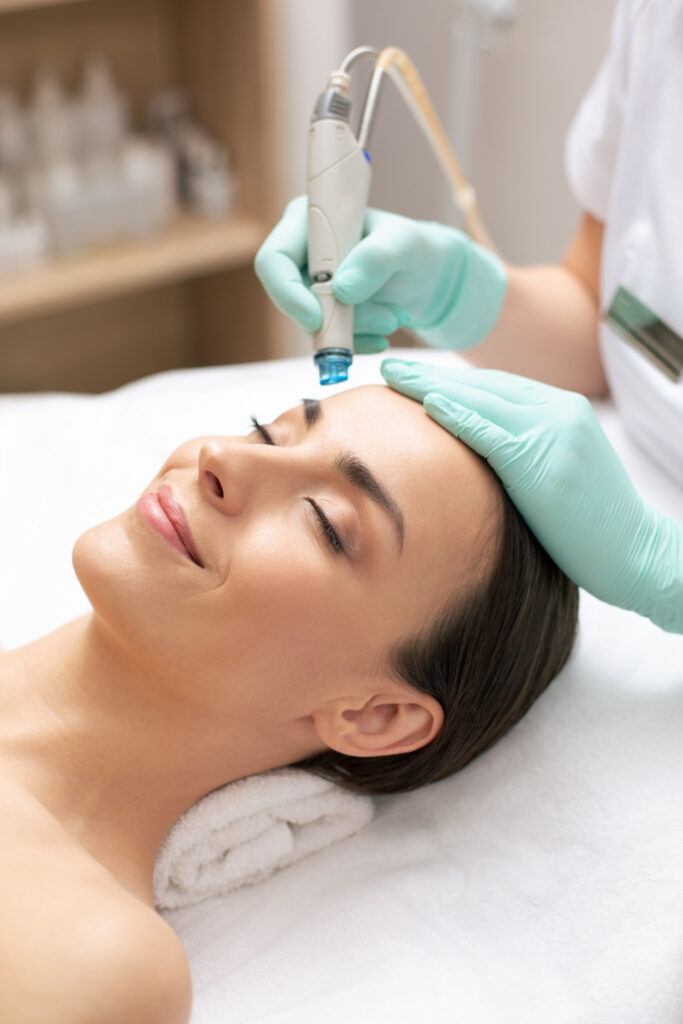
Microneedle Radiofrequency in Warsaw - the Morpheus8 procedure
Microneedle radiofrequency combines mechanical puncturing of the skin with the controlled application of RF energy. It helps improve skin firmness, texture, and thickness, as well as treat acne scars, enlarged pores, and stretch marks. At CareLife Clinic, the procedure is performed using Morpheus8 technology.
The parameters are not the same for every patient. The penetration depth, energy level, pulse duration, and number of passes are selected based on the treatment area, tissue thickness, and the expected result. The eye area requires a different protocol than the cheeks, abdomen, or deep scars.
What is the "
" microneedle radiofrequency treatment at CARELIFE CLINIC?
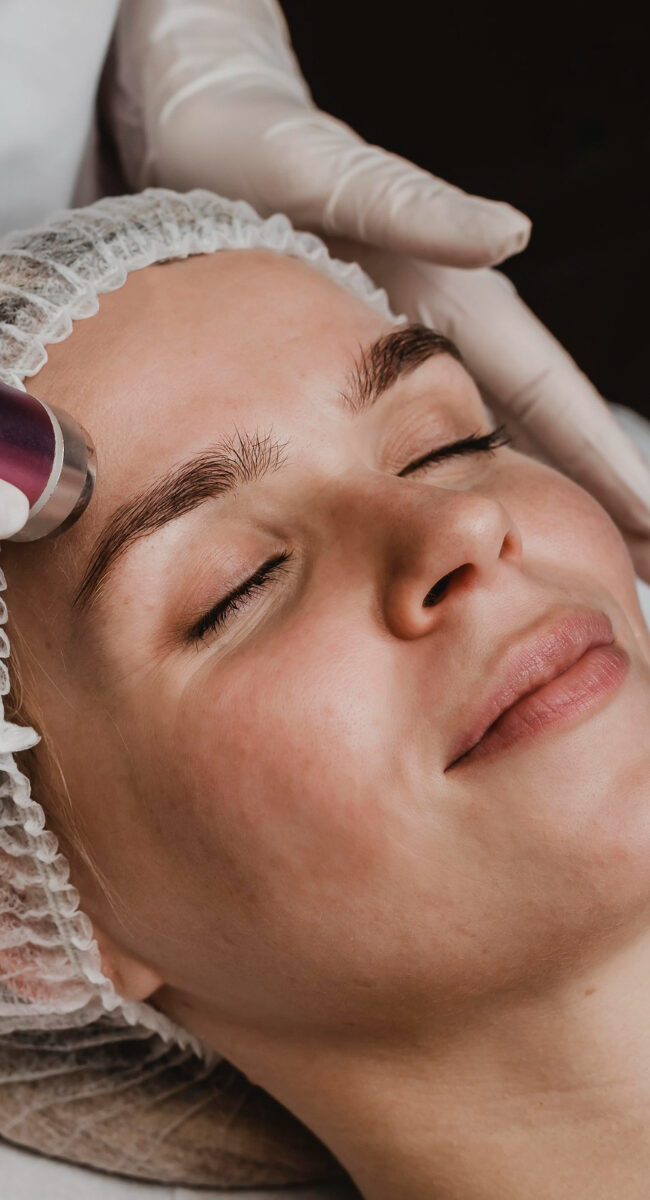
Microneedle radiofrequency, also known as microneedle RF, is a procedure that uses thin microneedles that also serve as electrodes. Once they reach a predetermined depth, they deliver radiofrequency energy directly to the tissues.
The micro-punctures create a controlled mechanical stimulus, while RF energy causes localized heating of the selected layer. The combination of these two mechanisms distinguishes this treatment from classic microneedling, which does not utilize thermal energy.
We’re open 7 days a week!
How does microneedle RF affect the skin?
During the procedure, RF energy heats the tissue around the microneedle tips, creating small areas of controlled coagulation. The body initiates a repair process that involves the remodeling of existing fibers and the production of new collagen structures.
The change does not occur solely on the skin’s surface. The settings can be adjusted to target the layer responsible for a specific problem. Shallower treatment can be used for uneven skin texture and fine lines, while deeper settings are used, among other things, for sagging skin or certain types of scars. The effects build up as the tissues regenerate over the following weeks and months.
Morpheus8 – Microneedle Radiofrequency Technology
Morpheus8 is a fractional, bipolar microneedle radiofrequency technology. The device allows you to select the treatment depth and the amount of energy delivered to the treatment area, as well as the skin thickness. Interchangeable tips enable procedures to be performed on the face and selected areas of the body.
Morpheus8 is not a separate type of treatment—it is a specific technology used to perform microneedle RF. The results depend not only on the device, but also on proper patient selection, the parameters set, the number of passes, and the experience of the practitioner performing the procedure.
Who is the Morpheus8 treatment for?
This treatment is suitable for women and men who notice a loss of firmness, fine lines, uneven skin texture, enlarged pores, or acne scars. It is also used on selected areas of the body with stretch marks or moderate sagging.
Microneedle RF can be considered both for the first signs of aging and for more visible structural changes. However, age alone does not determine eligibility. Other factors that play a role include skin thickness, the nature of the problem, skin type, overall health, and the possibility of achieving improvement without resorting to surgery.
Microneedle Radiofrequency Treatment in Warsaw - Price List
Scar and Stretch Mark Reduction – Morpheus8 Microneedle Radiofrequency
- Face – 1,600 PLN
- Mid-body area (flanks, buttocks, breasts) – 1,700 PLN
- Large area (entire abdomen, entire thighs) – 2,200 PLN
Cellulite Reduction – Morpheus8 Microneedle Radiofrequency
- Buttocks – 1,800 PLN
- Abdomen – 2,100 PLN
- Thighs – 1,900 PLN
- Large combined area (abdomen + thighs) – 2,700 PLN
Acne Treatment – Morpheus8 Microneedle Radiofrequency
- Face – 1,500 PLN
- Face and neck – 1,900 PLN
- Cheeks – 1,100 PLN
Facial Contouring – Morpheus8
- Face – 1,500 PLN
- Face and neck – 1,900 PLN
- Face and chin (jawline) – 1,600 PLN
Body Contouring and Fat Reduction – Morpheus8 Microneedle Radiofrequency
- Knees – 1,300 PLN
- Arms – 1,500 PLN
- Abdomen – 2,000 PLN
- Thighs – 2,100 PLN
- Large combined areas (abdomen + love handles) – 2,800 PLN
Are you thinking about choosing a service?
We can help you
We’re open 7 days a week!
Pre-procedure consultation and parameter selection
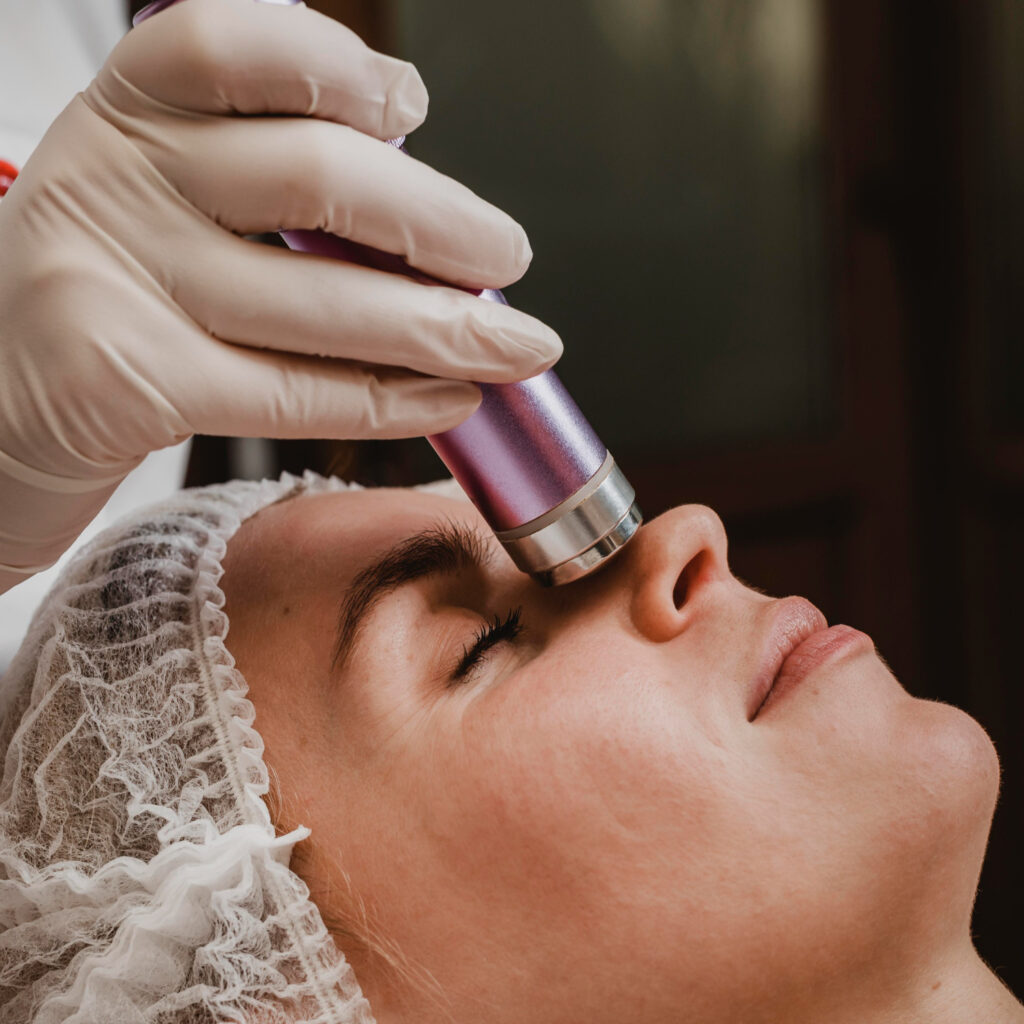
During the consultation, the doctor assesses skin thickness and elasticity, scar type, phototype, the amount of subcutaneous tissue, and active inflammatory lesions. The doctor also asks about chronic conditions, medications, implants, pacemakers, previous procedures, and a tendency toward abnormal scarring.
Based on this, the penetration depth of the microneedles, energy intensity, pulse duration, number of passes, and size of the treatment area are selected. These parameters may vary even between different parts of the face during a single treatment. A more intense setting does not always mean a better result—it should be tailored to the thickness and regenerative capacity of the tissues.
Indications for microneedle radiofrequency therapy
The most common indications include:
- – sagging and loss of skin firmness,
- – fine wrinkles and lines,
- – deterioration of the facial contour,
- – moderate sagging of the chin,
- – acne scars,
- – certain scars resulting from trauma or medical procedures,
- – enlarged pores,
- – uneven skin texture,
- – stretch marks,
- – loose skin on the abdomen, thighs, or arms,
- – changes resulting from pregnancy or weight loss.
The type of condition determines the intensity and number of treatments. A different treatment plan is used for stretch marks than for deep scars or sagging skin.
Doctors performing Morpheus8 procedures at Carelife Clinic
Microneedle radiofrequency treatments at CareLife Clinic are performed by physicians trained to work with RF energy technologies. The specialist evaluates the patient, selects the depth of the punctures and the energy intensity, and monitors the skin’s response during the procedure. Knowledge of anatomy, tissue thickness, and potential complications is particularly important for procedures around the eyes, the jaw, and in areas with little subcutaneous tissue.
Morpheus8 Microneedle Radiofrequency in Warsaw’s Ochota District—a treatment at CareLife Clinic
CareLife Clinic is located at 3 Józefa Siemieńskiego Street in Warsaw’s Ochota district. Nearby bus stops include Hale Banacha, Banacha, Wiślicka, Dickensa, and Bitwy Warszawskiej 1920 r. Patients arriving by car can use the private parking lot, which has 30 spaces.
Before the procedure, a specialist assesses the condition of the skin and adjusts the Morpheus8 settings based on the treatment area and indications. The patient receives information regarding the expected number of sessions, healing time, and home care. The clinic is also open on Saturdays and Sundays.
Microneedle RF for Skin Laxity and Loss of Firmness
In cases of loss of firmness, microneedle RF is designed to stimulate tissue remodeling and gradually increase tissue tension. The treatment can improve skin elasticity in the cheeks, lower face, neck, and other eligible areas.
This result is not comparable to the surgical removal of excess skin. Radiofrequency is most effective for mild to moderate changes. In cases of significant tissue sagging, a large amount of excess skin, or pronounced changes in volume, the doctor may suggest a different method or a combination therapy.
Microneedle Radiofrequency for the Face, Neck, and Décolletage
On the face, the treatment can target the cheeks, the area around the mouth, the forehead, the temples, and the lower third of the face. On the neck and décolletage, it is used to treat fine lines, loss of elasticity, and uneven skin texture.
Each of these areas requires different settings. The skin on the neck and décolletage is thinner and more prone to irritation than the skin on the cheeks. For this reason, the doctor adjusts the depth, energy level, and number of passes individually, rather than applying a single treatment protocol to the entire area.
Morpheus8 for the oval of the face, the chin, and the jawline
Morpheus8 can be used to improve skin firmness along the jawline, under the chin, and in the lower face. Gradual collagen remodeling can result in a more defined contour and less sagging skin.
However, this procedure is not a substitute for liposuction, double chin reduction, or volumetric augmentation. If the cause of an indistinct facial contour is excess fat, loss of volume, or significant sagging of the tissues, a different treatment may be necessary. It is particularly important to select the correct depth to avoid unintended effects on the subcutaneous tissue.
Microneedle RF for the under-eye area and delicate areas of the face
The skin around the eyes is thin and has a thin layer of subcutaneous tissue, so it requires careful assessment and gentler treatment parameters. Microneedle RF may be considered for fine wrinkles, loss of firmness, and uneven skin texture, provided that the applicator used is designed for this area.
The procedure will not remove fat hernias, severe under-eye bags, or dark circles caused solely by pigmentation or the anatomy of the eye socket. If the patient is incorrectly qualified, overly intense treatment parameters could worsen the appearance of this delicate area; therefore, the treatment protocol designed for the cheeks is not used here.
Microneedle Radiofrequency Treatment for Acne Scars
Microneedle RF can improve skin texture in cases of atrophic acne scars. The microneedles reach the targeted layer, and the thermal energy triggers collagen remodeling around the scar. The result of the treatment may be a gradual reduction in the depth of the indentations and a smoothing of the skin’s surface.
Before the procedure, the type of scars must be determined. Rolling, boxcar, and ice-pick scars differ in structure and do not always respond in the same way. Deep, narrow depressions or scars attached to the underlying tissue may require combining RF with another method. The procedure is not performed on active, inflamed acne lesions.
Microneedle RF for stretch marks, enlarged pores, and uneven skin texture
In cases of enlarged pores and uneven skin texture, the treatment is designed to improve the organization of the supporting fibers and gradually smooth the skin’s surface. It does not permanently “close” the pores, but it can reduce their visibility.
In the case of stretch marks, microneedle RF stimulates tissue remodeling along the affected areas. A better response is often achieved with newer, red stretch marks, although older, pale marks may also be eligible for treatment. The treatment reduces their width and visibility, but usually does not remove them completely.
Morpheus8 for the body after pregnancy or weight loss
After pregnancy or significant weight loss, the skin on the abdomen, arms, thighs, or knees may remain loose. Morpheus8 can be used to remodel and improve tissue firmness if the laxity is mild or moderate.
A postpartum procedure should be scheduled only after the postpartum period and breastfeeding have ended, and once the patient’s health has stabilized. In cases of significant excess skin, microneedle RF cannot replace surgical intervention. In such situations, the consultation should serve to realistically assess the potential outcome, rather than promise complete tissue tightening.
Microneedle Radiofrequency vs. Fractional CO2 Laser
Both methods create controlled areas of damage in the skin and trigger the regeneration process, but they do so in different ways. The fractional CO₂ laser uses light energy and also affects the epidermis. Microneedle RF delivers thermal energy through electrodes placed at a selected depth.
The CO₂ laser can provide powerful resurfacing for scars, wrinkles, and photoaging, but it is typically associated with more noticeable peeling and a longer healing period. RF allows for more precise delivery of heat beneath the skin’s surface and results in a shorter recovery time for some patients. The choice depends on the type of problem, skin type, desired outcome, and acceptable healing time.
Microneedle RF vs. Mesotherapy, PRP, and Tissue Stimulators
Microneedle radiofrequency is a device-based procedure that involves micro-punctures and thermal energy. Needle mesotherapy involves administering small amounts of a selected preparation into the skin; therefore, it is primarily used to hydrate and nourish the tissues.
Platelet-rich plasma (PRP) uses material derived from the patient’s own blood, while tissue stimulators are injectable preparations that promote gradual skin remodeling. These methods can be combined if the patient requires simultaneous improvement in skin structure, regeneration, and density. The doctor then determines the order and intervals between procedures.
When is microneedle radiofrequency not the best choice?
Microneedle RF cannot replace a surgical facelift in cases of significant excess skin, nor can it replace volumetric treatments in cases of marked volume loss. Nor is it the primary treatment for active acne, severe erythema, visible broken capillaries, or hyperpigmentation requiring pigment-targeted therapy.
The procedure should be postponed in cases of infection, active herpes, skin damage, or a recent sunburn. Extra caution is required when dealing with very thin subcutaneous tissue, as treatment that is too deep or too intense may lead to unwanted fat loss. If the primary concern is skin tone, volume, or muscle function, the doctor may recommend a different procedure.
How should I prepare for a microneedle RF treatment?
Before your appointment, please inform your doctor about all medications, supplements, chronic conditions, allergies, and any implanted electronic devices or metal objects in the treatment area. Do not stop taking anticoagulants or antiplatelet medications on your own.
For a few days before the procedure, as recommended by your specialist, you should stop using irritating skincare products that contain retinoids, high concentrations of acids, or exfoliants. You should avoid sun exposure and report any active cold sores, infections, or treatment with isotretinoin. On the day of your appointment, your skin should be clean, free of irritation, and without any recent damage.
How does the Morpheus8 procedure work?
The skin is cleaned, disinfected, and numbed with a cream. The topical anesthetic is usually left on the treatment area for about 30–60 minutes. Next, an appropriate, sterile tip and operating parameters are selected.
The treatment head is applied sequentially to designated areas. The microneedles penetrate to the set depth, deliver an RF pulse, and retract. The procedure may involve one or several passes at different depths. After the procedure, a soothing cream is applied to the skin. The entire visit, including anesthesia, can last from about 60 to 120 minutes.
Does microneedle radiofrequency treatment hurt?
Even with anesthesia, the patient may feel brief pricks, pressure, and warmth. The intensity of these sensations depends on the area, the depth of the punctures, the energy level, and individual sensitivity.
Areas located near bones—such as the forehead and jawline—may be more sensitive. The settings should be adjusted to strike a balance between effectiveness and safety. Severe, unusual pain during the procedure must be reported immediately to the practitioner.
How long does the procedure and recovery take?
The treatment itself usually takes about 20 to 60 minutes, depending on the area being treated and the number of passes. You should also factor in the time needed for the consultation, skin preparation, and for the numbing cream to take effect.
Redness and moderate swelling usually last 1–3 days. Small spots, a sensation of warmth, dryness, and mild flaking may occur and last for a few days. If higher treatment parameters are used, the reaction may last longer. It’s a good idea to schedule the treatment at least a few days before an important event.
When do you start to see results from microneedle RF treatment?
Immediately after the procedure, the skin may feel tighter, but part of this change is due to temporary swelling. The first real signs of skin remodeling can usually be seen in the weeks that follow.
Collagen production and remodeling is a gradual process. Improvements in firmness, structure, and the appearance of scars may develop over a period of about 3–6 months. With a series of treatments, the results of subsequent sessions build upon the ongoing remodeling process initiated by previous procedures.
How many microneedle radiofrequency treatments are needed?
For mild sagging or as a preventive measure to improve skin quality, your doctor may recommend a single treatment. Most often, however, the treatment plan involves a series of 2–3 procedures performed at intervals of about 4–8 weeks.
Acne scars, stretch marks, and more noticeable sagging may require a greater number of sessions or a combination of RF with another method. Maintenance treatments are performed on a case-by-case basis, most often after assessing the degree to which the initial results have faded and the current condition of the skin.
Post-Treatment Recommendations for Morpheus8
After the procedure, use a gentle cleanser, a cream that helps restore the skin barrier, and SPF 50 sunscreen. For the first few days, do not pick at the small scabs or speed up the peeling process with a scrub.
It is also generally recommended to:
- Avoid wearing makeup for the first 24–48 hours,
- refrain from exercising, using the sauna, and taking hot baths for 24–72 hours,
- avoiding the pool until the injection sites have healed,
- stopping the use of retinoids, acids, and highly irritating cosmetics for about 5–7 days,
- Do not perform massages or other treatments on the treated area,
- protecting the skin from the sun throughout the entire recovery period.
The exact timing depends on the intensity of the procedure and the skin’s reaction.
Contraindications for microneedle radiofrequency treatment
The most important contraindications include:
- pregnancy and breastfeeding,
- a pacemaker or other active electronic implants,
- an active infection, herpes, or skin inflammation,
- open wounds in the treatment area,
- active cancer treatment,
- uncontrolled chronic diseases,
- coagulation disorders,
- a tendency to develop keloids,
- sensory disturbances in the treated area,
- metal implants located directly within the area of influence,
- the inability of the skin to heal properly.
Treatment with isotretinoin, autoimmune diseases, immunosuppressive medications, and previous cosmetic procedures require an individual assessment. Not all of these factors automatically rule out the procedure.
Possible Side Effects and Warning Signs
Common reactions include redness, swelling, tenderness, small scabs, and a temporary burning sensation. Bruising, temporary hypersensitivity, or brief numbness may also occur.
Rarer, more serious complications include burns, infection, scarring, pigmentation disorders, prolonged sensory disturbances, nerve damage, and unintended loss of body fat. The following situations require immediate contact with the clinic:
- severe or worsening pain,
- blisters or signs of a burn,
- purulent discharge, fever, or worsening redness,
- obvious asymmetry in facial movements,
- persistent muscle weakness or numbness,
- a rapidly enlarging tissue cavity,
- wounds that won’t heal or darkening of the skin.
Do not use antibiotics, steroid ointments, or irritating preparations on your own without consulting a doctor.
Morpheus8 Microneedle Radiofrequency Treatment in Warsaw - FAQ
Before the procedure, patients most often ask about pain, the number of sessions required, the healing time, and the differences between Morpheus8 and fractional laser treatment. Below, we answer the most important questions regarding the course of treatment and returning to daily activities.
Can you go back to work right away after Morpheus8?
This is usually possible, but redness and swelling may be visible for 1–3 days. After a more intensive treatment, small spots and flaking may persist for longer.
When can you apply makeup?
Usually after 24–48 hours, provided the injection sites have healed and the skin is not severely irritated. The exact timeframe depends on the intensity of the procedure.
Can Morpheus8 be performed in the summer?
The procedure can be scheduled at any time of year, but the skin should not be freshly tanned. It is essential to avoid intense sun exposure and to use SPF 50 regularly.
Will one treatment be enough?
For minor sagging, a single treatment can provide a noticeable improvement. For scars, stretch marks, or more visible changes, a series of 2–3 treatments is usually performed.
Does Morpheus8 help with deep acne scars?
It can reduce their depth and improve skin texture, but the results depend on the type of scars. Deeply embedded or ice-pick scars may require additional treatments.
How does Morpheus8 differ from standard microneedling?
Both procedures use microneedles, but Morpheus8 also delivers RF energy through them. As a result, in addition to mechanical puncturing, the selected layer of tissue is heated in a controlled manner.