


Botulinum Toxin Warsaw
Botulinum toxin temporarily reduces the excessive activity of certain facial muscles. As a result, it can smooth out frown lines, crow’s feet, and horizontal forehead lines, as well as prevent them from becoming more pronounced. At CareLife Clinic in Warsaw’s Ochota district, the procedure is performed by a doctor following a prior consultation. The specialist evaluates facial expressions, facial symmetry, indications, and contraindications, and then individually selects the injection sites and the dose of the product. The goal of the treatment is a fresher, more rested appearance while preserving natural facial features.
+340 Satisfied Patients
+12 Specialists on the team
+2,400 Procedures per year
+15 Years of experience
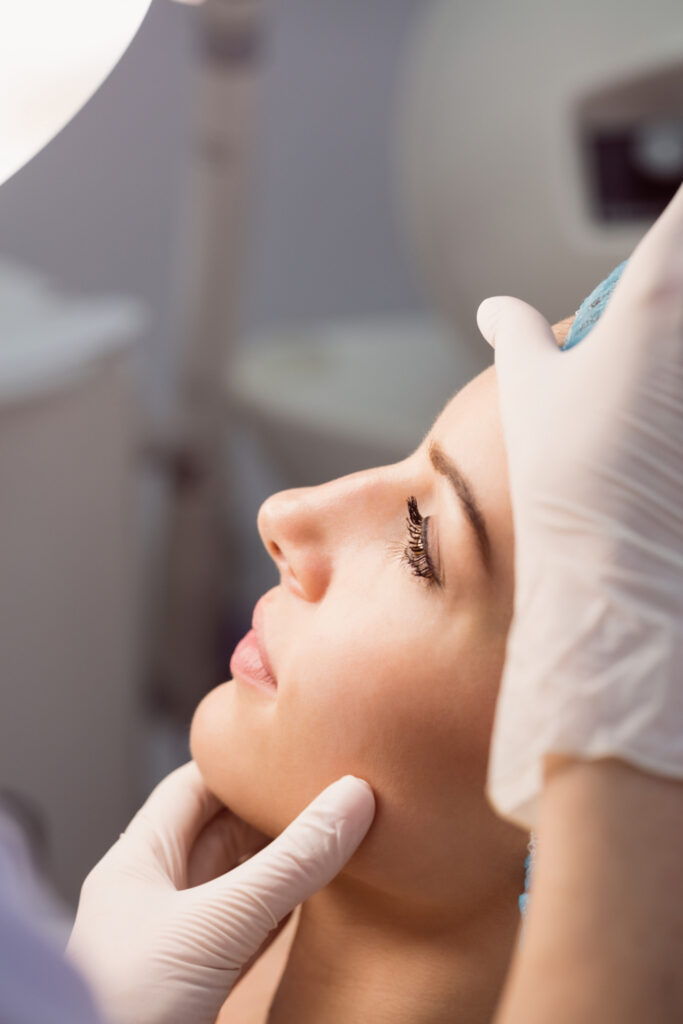
Botulinum Toxin in Warsaw
A botulinum toxin treatment temporarily reduces the activity of specific muscles responsible for the formation of expression lines. It most commonly targets the forehead, the frown line between the eyebrows, and crow’s feet around the eyes. It can also be used on the nose, chin, lips, and neck if the doctor determines during the consultation that there are appropriate indications.
At CareLife Clinic in Warsaw’s Ochota district, the injection sites and dosage are tailored individually to the patient’s facial anatomy, muscle strength, and desired outcome. The goal is not to completely immobilize the face, but to soften excessive facial expressions and achieve a fresher appearance while preserving natural features.
How does the botulinum toxin
work at CARELIFE CLINIC?
Botulinum toxin temporarily inhibits the release of acetylcholine at neuromuscular junctions. As a result, the treated muscle contracts less strongly, and the skin overlying it does not crease as intensely when the patient furrows their brow, squints, or brings their eyebrows together.
The effect is limited exclusively to the specific muscles into which the product was injected. It does not fill in wrinkles, increase tissue volume, or alter the skin’s structure in the same way as hyaluronic acid, tissue stimulators, or laser therapy. The effect is temporary—as neuromuscular transmission is restored, muscle activity gradually returns.

We’re open 7 days a week!
When should you consider a botulinum toxin treatment?
It is worth considering a consultation when expression lines give the face a tired, stern, or worried appearance, even though this does not reflect the patient’s actual state of mind. The procedure can be performed both when the first lines appear due to facial expressions and when the changes are more permanent.
The most common indications are:
- a deep frown line between the eyebrows,
- horizontal forehead wrinkles,
- crow’s feet around the eyes,
- bunny lines on the sides of the nose,
- excessive tension in the mentalis muscle,
- drooping corners of the mouth caused by muscle activity,
- fine lines caused by muscle activity around the mouth,
- expressive facial movements that contribute to the formation of wrinkles.
There is no single “right” age limit. The appropriateness of the procedure is determined by facial anatomy, muscle function, and actual medical indications—not by the patient’s age alone.
Botulinum Toxin Warsaw - Price List
Botulinum toxin – reduction of expression lines (Azzalure)
Follow-up visit included in the price of the treatment.
- Area around the outer corner of the eye (crow’s feet) – 900 PLN
- Glabellar lines – 900 PLN
- Horizontal forehead wrinkles – 900 PLN
- Forehead (glabellar line + horizontal forehead wrinkles) – 1,700 PLN
- Upper face (glabellar lines + horizontal forehead wrinkles + crow’s feet) – 2,500 PLN
- Chin wrinkles (pockmarked chin) – 700 PLN
- Eyebrow lift / eye opening – 1,700 PLN
Botulinum toxin – treatment for hyperhidrosis
- Hyperhidrosis treatment (underarms / hands / feet) – 2,200 PLN
Are you thinking about choosing a service?
We can help you
We’re open 7 days a week!
Pre-procedure consultation
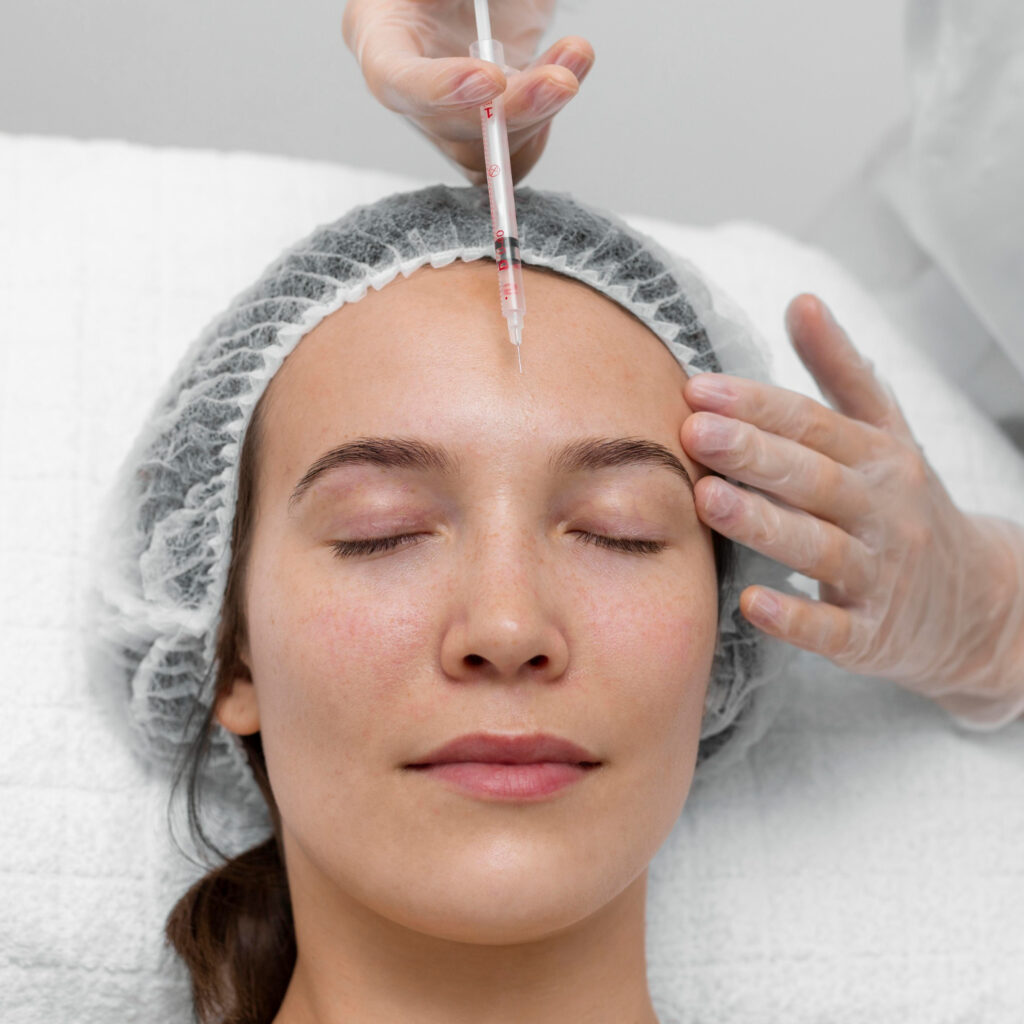
The consultation begins with a discussion of the desired results and any previous facial procedures. The doctor assesses wrinkles at rest and during facial expressions, the position of the eyebrows, eyelid movement, facial symmetry, and the strength of individual muscles.
The medical history includes chronic and neurological conditions, neuromuscular conduction disorders, allergies, current medications, active infections, and previous reactions to botulinum toxin. You should also disclose any prior surgeries, fillers, thread lifts, and injuries in the planned treatment area.
Based on this information, the doctor determines the injection sites, the dosage, and the expected extent of facial movement reduction. The doctor also discusses possible side effects, when the effects will become noticeable, and recommendations for the first few hours after the procedure.
Facial Treatment Areas
Botulinum toxin can be used on various parts of the face, but each area requires a separate assessment of its anatomy and muscle function. The treatment may include:
- the forehead —horizontal wrinkles visible when raising the eyebrows,
- the area between the eyebrows — the “frown line,”
- the area around the eyes —crow’s feet,
- the sides of the nose — bunny lines,
- the area around the mouth —selected expression lines and excessively drooping corners of the mouth,
- chin —an uneven, rippled surface caused by tension in the mentalis muscle,
- the jawline —excessive activity of the muscles that lower the lower part of the face,
- the neck — visible bands of the platysma muscle.
Not all areas need to be treated during a single visit. The doctor selects the areas where muscle relaxation will improve appearance without compromising the muscle’s important function.
Doctors who perform botulinum toxin treatments at Carelife Clinic


At CareLife Clinic, patients are cared for by experienced aesthetic medicine physicians. These specialists determine a patient’s eligibility for injection-based, regenerative, and technology-driven treatments, tailoring the therapy to the patient’s facial anatomy, skin condition, and desired outcome. Each treatment plan takes into account contraindications, safety, and the preservation of a natural appearance.
Botulinum Toxin in Warsaw's Ochota District — Treatment at CareLife Clinic
CareLife Clinic is located at 3 Józefa Siemieńskiego Street in Warsaw’s Ochota district. Patients can use the free parking lot at the clinic, and after their procedure, they receive personalized recommendations and information on when to return for a follow-up visit.
The treatment is preceded by a medical consultation that includes an assessment of facial expressions, facial anatomy, and any contraindications. This ensures that the scope of treatment is based on actual medical indications rather than a formulaic selection of treatment areas. CareLife Clinic also offers other aesthetic medicine treatments, allowing patients to choose a solution tailored to their specific type of wrinkles and skin condition.
Dynamic wrinkles vs. static wrinkles—how do they differ?
Dynamic wrinkles form when muscles contract. They are primarily visible when the patient furrows their brow, smiles, squints, or raises their eyebrows. These include, among others, crow’s feet, the glabellar line, and horizontal forehead lines. Botulinum toxin acts directly on this type of wrinkle.
Static wrinkles remain visible even when the face is relaxed. They may result from years of intense facial expressions, collagen loss, photoaging, or a reduction in tissue volume. In the case of deeply etched lines, simply limiting muscle activity may not be enough. In such cases, the doctor may recommend a combination therapy, including, for example, tissue stimulators, hyaluronic acid, microneedle radiofrequency, or fractional laser treatment.
Botulinum Toxin for the Glabellar Line, Forehead, and Crow’s Feet
The glabellar line (frown line) is caused by the activity of the muscles responsible for bringing the eyebrows together and lowering them. Relaxing these muscles can soften the vertical lines between the eyebrows and make the face appear less tense.
Horizontal forehead lines are associated with the activity of the frontalis muscle, which also raises the eyebrows. In this area, it is particularly important to select the correct dose and injection sites, as excessive muscle weakening could cause a feeling of heaviness in the forehead or drooping of the eyebrows.
Crow’s feet appear when you smile or squint. Precise injection of the product into the lateral portion of the orbicularis oculi muscle can reduce their visibility without taking away from the face’s natural expression.
A natural result without exaggerating facial expressions
A natural result depends primarily on proper patient selection, knowledge of anatomy, and appropriate dosage. For one person, it may be necessary to more strongly limit the activity of certain muscles, while for another, a gentler injection at fewer injection sites will yield better results.
Before the procedure, the doctor observes the face at rest and while the patient furrows their brow, smiles, and brings their eyebrows together. This allows the doctor to account for differences in muscle strength, eyebrow position, and natural asymmetry. The goal is to reduce wrinkles while preserving mobility in those areas where complete relaxation is not necessary.
How should you prepare for the procedure?
The procedure does not require a special diet or routine medical tests for any healthy person. However, it’s a good idea to bring a list of any medications and supplements you’re taking, as well as information about previous procedures, to your appointment.
Before taking this medication, tell your doctor about:
- anticoagulants and antiplatelet medications,
- antibiotics, especially those that affect neuromuscular transmission,
- muscle relaxants,
- pregnancy or breastfeeding,
- neuromuscular disorders,
- infections, herpes, or skin inflammation,
- previous administration of botulinum toxin and the date of the last treatment.
Do not stop taking medications prescribed by your doctor on your own. On the day of the procedure, it is best to avoid alcohol and arrive without heavy makeup on the treatment area.
How is botulinum toxin administered?
First, the doctor reassesses your facial expressions and marks the injection sites. The skin is cleansed and disinfected. Then, small amounts of the solution are injected with a very fine needle into the selected muscles or, in the case of hyperhidrosis treatment, intradermally in a specific area.
The injection itself usually takes a few to several minutes. The entire visit, including the consultation, preparation, and post-treatment instructions, takes longer. After the procedure, small injection marks, localized redness, or slight skin swelling may be visible, but these usually subside quickly.
Is the procedure painful?
Most patients feel brief pricks, a slight burning sensation, or a feeling of pressure at the injection site. The procedure on the face is performed with a thin needle and usually does not require anesthesia.
For patients with higher sensitivity, the skin can be cooled locally or, if the doctor deems it appropriate, an anesthetic cream can be applied. Treatment for excessive sweating of the hands or feet may require more extensive pain management, as these areas are more densely innervated than the forehead or the area around the eyes.
When do the effects appear, and how long do they last?
Botulinum toxin does not work immediately. The first reduction in muscle activity is usually noticeable after 2–4 days, and the effect continues to develop over the following days. The full effect is typically assessed after about 10–14 days.
The effects usually last for 3–4 months, but in some patients they may be shorter or longer. Factors influencing this include muscle strength, the treatment area, the individual’s response, the dose administered, and the frequency of previous treatments. As muscle activity returns, facial expressions and the visibility of wrinkles gradually reappear.
How often can the procedure be repeated?
Another treatment may be considered once the previous effect has worn off and facial expressions have been reevaluated. This usually means waiting several months. It’s not advisable to schedule a treatment automatically without first checking whether the muscles have actually regained the level of activity that would require another treatment.
Administering the product too frequently or performing additional injections before the full effect has developed may increase the risk of excessive muscle weakness and an unnatural result. Any necessary correction is assessed during a follow-up visit, usually after about two weeks.
Post-Treatment Recommendations
You can usually return to your daily activities immediately after your appointment. For the first few hours, do not apply pressure, massage vigorously, or rub the injection sites. On the day of the procedure, it is also advisable to avoid intense exercise, saunas, hot baths, and excessive alcohol consumption.
For the period specified by your doctor, do not perform facial massages, cosmetic treatments, or procedures that use energy on the treated area. Do not touch the small injection marks with unwashed hands. If your doctor provides recommendations that differ from the general guidelines, follow the instructions specific to your procedure.
Contraindications for Botulinum Toxin Injection
The most important contraindications include allergy to the product’s ingredients and an active infection at the planned injection site. The procedure is also not performed during pregnancy or while breastfeeding.
The following conditions require special evaluation:
myasthenia gravis and other neuromuscular transmission disorders,
active neurological diseases,
coagulation disorders,
severe skin inflammation,
use of certain antibiotics and muscle relaxants,
recent administration of another botulinum toxin product,
previous allergic reactions or unusual complications,
planned procedures or surgeries in the same area.
The decision to perform the procedure is always made by a doctor after a medical history review.
Possible side effects
The most common reactions are related to the injection itself. They may include localized redness, tenderness, slight swelling, pain, or bruising. Some patients experience a temporary headache.
Depending on the treated area, asymmetry, excessive elevation or lowering of the eyebrows, drooping of the eyelid, a feeling of heaviness in the forehead, dry eyes, or weakness of an involuntary muscle may also occur. Most of these reactions are temporary, as the effects of the medication gradually wear off.
Conditions requiring immediate medical attention include, among others, difficulty swallowing, speaking, or breathing; generalized muscle weakness; and symptoms of a severe allergic reaction. These are rare complications, but the patient should be informed of them before the procedure.
Botulinum Toxin for Bruxism
In cases of bruxism, botulinum toxin can be injected into the overactive masseter muscles. The goal is to reduce muscle tone and the force of jaw clenching, which in selected patients may alleviate muscle pain, a feeling of strain, and morning stiffness in the jaw area.
However, the procedure does not eliminate all causes of teeth grinding and is not a substitute for a dental evaluation, treatment of occlusal disorders, a protective splint, or addressing factors that exacerbate tension. Patient selection should take into account the condition of the teeth, temporomandibular joints, and masticatory muscles. A reduction in the volume of the masseter muscles and a visual slimming of the lower face may be an additional effect, rather than the primary goal of treatment.
Botulinum Toxin for Hyperhidrosis
Botulinum toxin can reduce the transmission of nerve impulses that stimulate sweat glands. The preparation is administered intradermally at multiple, evenly spaced points. The most commonly treated area is the underarms, and following individual evaluation, the palms or soles may also be treated.
Before the procedure, secondary causes of hyperhidrosis—such as thyroid disorders, metabolic disorders, infections, or medication side effects—must be ruled out. The effect is not permanent—sweating gradually returns as nerve conduction is restored. The dosage, method of anesthesia, and cost differ from the procedure performed for expression lines.
Botulinum toxin or hyaluronic acid—which method should you choose?
Botulinum toxin and hyaluronic acid have different uses. The former reduces excessive muscle activity, which is why it is primarily used for expression lines. Hyaluronic acid is a filler—it can restore volume, contour a specific area, or reduce the appearance of furrows.
For the “lion’s wrinkle,” which is mainly visible when furrowing the brows, botulinum toxin is more commonly considered. In the case of nasolabial folds, loss of cheek volume, or the need to improve lip contour, hyaluronic acid may be the recommended treatment. Deep, persistent wrinkles may require combination therapy, but the order and timing of the treatments are determined by the doctor.
Botulinum Toxin in Warsaw's Ochota District - FAQ
Before their first treatment, patients most often ask about the natural-looking results, how long the effects last, and whether they can quickly return to their daily activities. Below, we answer the most important questions regarding preparation, the treatment process, and the results of the therapy.
Will my face stop moving after the procedure?
A properly selected dose is intended to limit excessive activity in specific muscles, not to paralyze the entire face. The extent of facial mobility retained depends on the treatment area, anatomy, and the specific goal of the procedure.
How long does the appointment take?
The injection itself usually takes anywhere from a few to a dozen or so minutes. The first visit takes longer because it includes a consultation, an assessment of facial expressions, ruling out any contraindications, and a discussion of recommendations.
Can I go back to work after the procedure?
Most often, yes. Immediately after the procedure, there may be slight redness, puncture marks, or a small bruise, but the procedure usually does not require taking a few days off from work.
Does botulinum toxin work right away?
No. The first changes usually appear after a few days, while the full results are assessed after about 10–14 days.
Can the procedure be combined with hyaluronic acid or mesotherapy?
Yes, if there are medical indications, but the procedures are not always performed during a single visit. The doctor determines the appropriate sequence and intervals between procedures.
Is a follow-up visit necessary after the procedure?
The follow-up examination is usually conducted once the full effect has developed, often after about two weeks. The doctor assesses symmetry, muscle function, and whether the achieved result is in line with the established plan.