


Tissue Stimulators in Warsaw
Tissue stimulators are injectable formulations designed to stimulate natural regenerative processes and gradually improve skin density, firmness, and elasticity. Depending on the indication, they may contain, among other ingredients, polynucleotides, L-polylactic acid, calcium hydroxyapatite, or hyaluronic acid-based components with a biomodeling effect. They are not traditional fillers—the results stem primarily from tissue remodeling rather than an immediate increase in volume. At CareLife Clinic in Warsaw’s Ochota district, we select the appropriate formulation for the eye area, face, neck, décolletage, hands, or other areas during a medical consultation.
+340 Satisfied Patients
+12 Specialists on the team
+2,400 Procedures per year
+15 Years of experience
Tissue stimulators in Warsaw
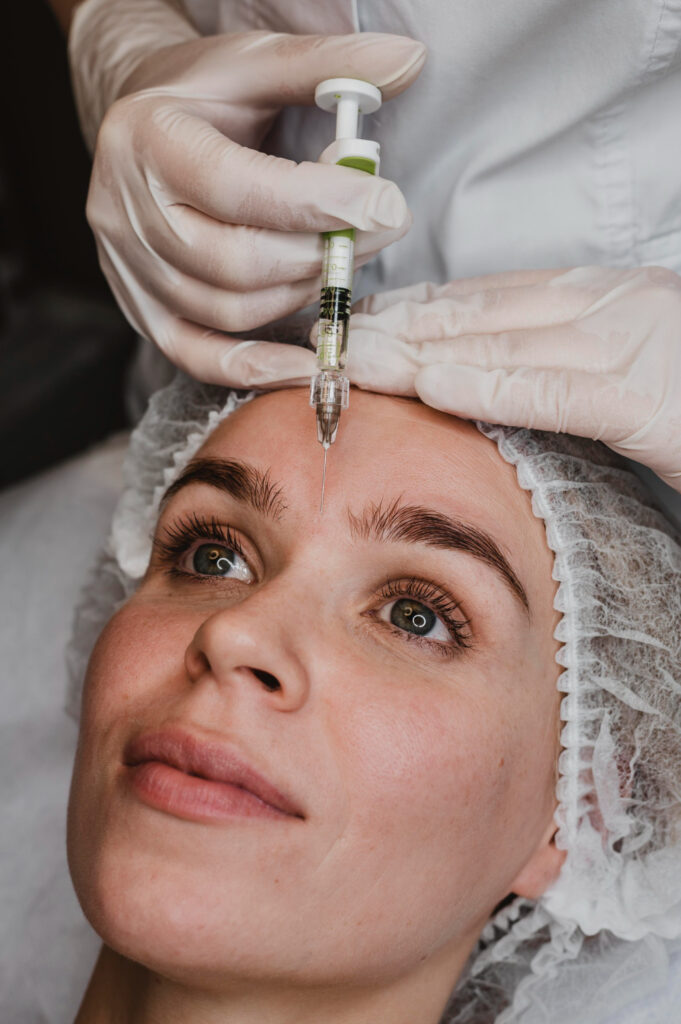
Tissue stimulators are primarily used to improve skin quality: its density, firmness, elasticity, and hydration levels. The results develop gradually, as these treatments are designed to stimulate regenerative processes and tissue remodeling, rather than simply filling a single wrinkle immediately.
At CareLife Clinic in Warsaw, the selection of a treatment is preceded by an assessment of the skin, facial anatomy, and the desired outcome. Biostimulation can be performed, among other areas, around the eyes, on the cheeks, along the jawline, on the neck, décolletage, and hands. The type of substance, administration technique, and number of treatments depend on the area being treated.
What are the
tissue stimulators at CARELIFE CLINIC?
Tissue stimulators are a broad group of injectable preparations that influence the regenerative processes occurring in the skin and subcutaneous tissue. They may contain, among other things, polynucleotides, L-polylactic acid, calcium hydroxyapatite, or hyaluronic acid complexes used for biomodeling.
This is not a single substance or a single universal treatment. Individual products differ in their mechanism of action, injection site, number of sessions required, and the time it takes for the effects to develop. Not every product can be used under the eyes, in the lips, on the neck, or in the lower part of the face.
We’re open 7 days a week!
How do biostimulators affect the skin?
Biostimulators can stimulate fibroblasts—the cells involved in the production of collagen, elastin, and components of the extracellular matrix. As a result, the skin can gradually become firmer, more elastic, and more resistant to sagging.
The exact mechanism of action depends on the substance. Polynucleotides are mainly used to support regeneration and hydration, while L-polylactic acid focuses the treatment more strongly on the gradual rebuilding of collagen. Products containing hyaluronic acid complexes can combine improved hydration with skin bioremodeling.
Who are tissue stimulators intended for?
The treatment may be suitable for people who have noticed a loss of firmness, deterioration in skin structure, fine lines, or a less defined facial contour. Patients who expect gradual improvement without a noticeable increase in volume or changes to their natural features also choose these stimulators.
There is no single age at which one should begin biostimulation. For younger individuals, the goal may be to improve hydration and support skin health. For more advanced signs of aging, therapy may include treatments that more intensively stimulate collagen production or a combination of several methods.
Tissue Stimulators in Warsaw - Price List
Tissue Stimulators
- Nucleofill, Jalupro – 1,600 PLN
- Neuvia Hydrodeluxe, Infini Premium Stimulate – 1,300 PLN
- Eye Area Stimulation (Jalupro Young Eye) – 1,600 PLN
Are you thinking about choosing a service?
We can help you
We’re open 7 days a week!
Pre-treatment consultation and product selection
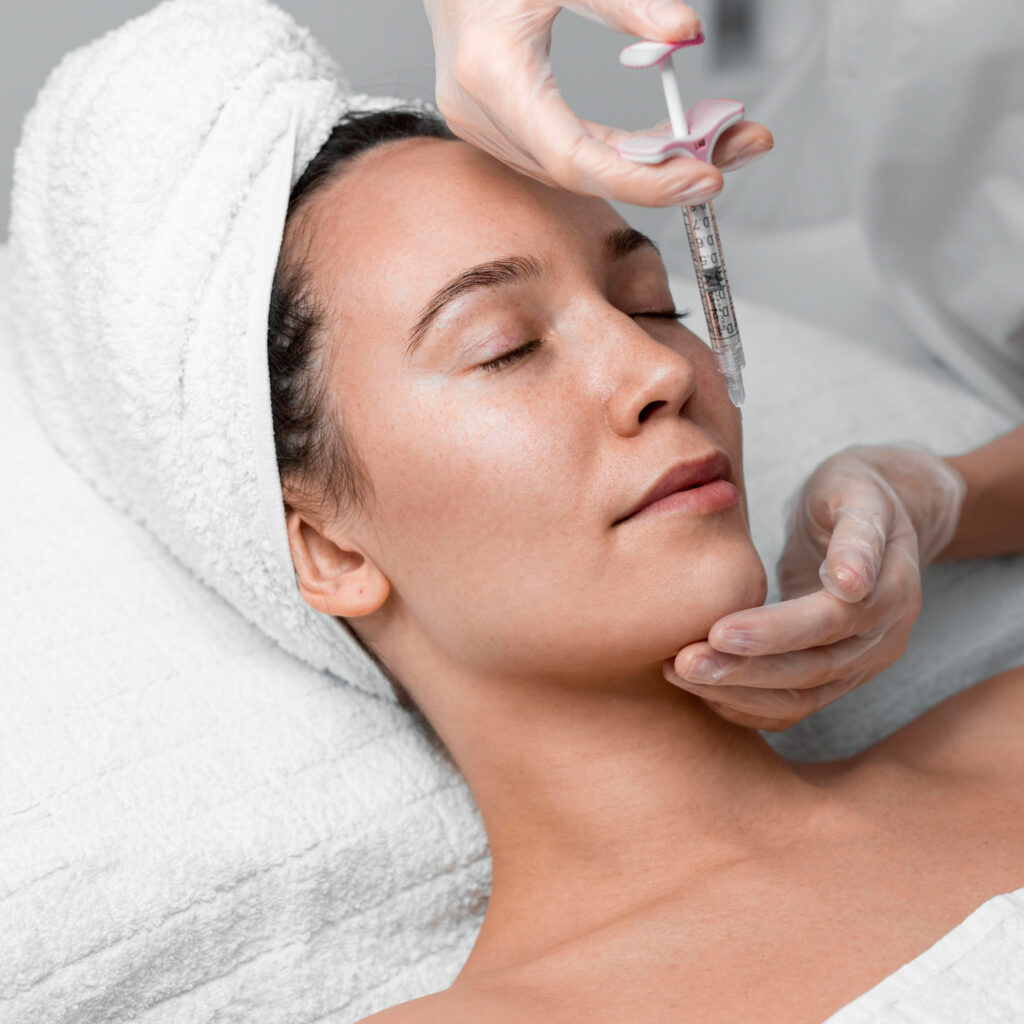
During the consultation, the doctor assesses the skin’s thickness, elasticity, and hydration level, as well as the degree of sagging, the distribution of fat tissue, and the natural proportions of the face. The doctor also examines the area both at rest and during facial expressions.
The medical history includes chronic conditions, allergies, a tendency toward swelling and keloids, current medications, and previous treatments such as fillers, threads, and device-based procedures. Based on this information, the substance, number of ampoules, administration technique, and approximate number of sessions are selected.
Indications for Biostimulation Treatment
Tissue stimulators may be considered for problems such as:
- – loss of skin firmness and elasticity,
- – thin, dry, or sagging skin,
- – fine wrinkles,
- – loss of firmness in the cheeks and jawline,
- – a less defined facial contour,
- – wrinkles on the neck and décolletage,
- – loss of skin quality on the hands,
- – thin skin and fine lines under the eyes,
- – uneven skin texture and certain scars,
- – signs of photoaging,
- – the need for gradual regeneration without traditional volumetric procedures.
The extent of improvement depends on the type of problem. The stimulator will not remove excess skin, eliminate significant fat deposits, or replace a surgical facelift.
Doctors who perform tissue stimulator procedures at Carelife Clinic
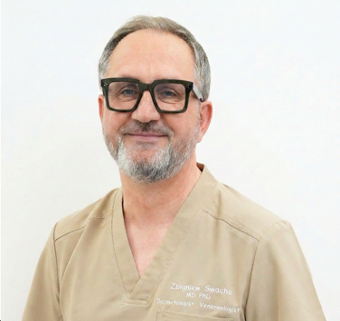


Treatments at CareLife Clinic are performed by physicians who select the product, technique, and depth of administration based on the patient’s anatomy and skin condition. The evaluation takes into account the expected outcome, previous injections, and the potential for side effects. The patient also receives recommendations specific to the stimulator used and information about when to schedule a follow-up evaluation of the results.
Tissue Stimulators in Warsaw’s Ochota District — Treatment at CareLife Clinic
We perform these procedures at CareLife Clinic, located at 3 Józefa Siemieńskiego Street in Warsaw’s Ochota district. Free parking for patients is available next to the clinic.
Before the injection, a consultation is conducted to assess the skin, facial proportions, contraindications, and previous treatments. The availability of various aesthetic medicine procedures allows us to select a stimulator tailored to a specific issue or to plan a treatment regimen combining biostimulation with mesotherapy, PRP, laser therapy, or microneedle radiofrequency.
Indications for Biostimulation Treatment
Tissue stimulators may be considered for problems such as:
- loss of skin firmness and elasticity,
- thin, dry, or flaccid skin,
- fine wrinkles,
- loss of firmness in the cheeks and jawline,
- a less defined facial contour,
- wrinkles on the neck and décolletage,
- deterioration of the skin on the hands,
- thin skin and fine lines under the eyes,
- uneven skin texture and certain scars,
- signs of photoaging,
- the need for gradual regeneration without traditional volumetric treatments.
The extent of improvement depends on the type of problem. The stimulator will not remove excess skin, eliminate significant fat deposits, or replace a surgical facelift.
Tissue stimulators for sagging, wrinkles, and loss of firmness
In cases of skin laxity, the goal of the treatment is to improve the skin’s structure and elasticity. The effect does not consist of a sudden tightening of the tissues immediately after treatment. The remodeling process can take anywhere from a few weeks to several months.
Fine lines may become less visible thanks to improved skin density and hydration. Deep nasolabial folds, marionette lines, or deep-set wrinkles, however, have more complex causes. If they result from volume loss or sagging tissues, volumizing treatments, hyaluronic acid, or combination therapy may be needed.
Tissue stimulators for the under-eye area
For the eye area, formulations designed for thin and delicate skin are selected, most often containing polynucleotides or other regenerative substances. The treatment can improve hydration, elasticity, and the appearance of fine lines.
Fillers do not remove fat hernias, large amounts of excess skin, or pronounced tear troughs resulting from anatomical structure. The product should also be selected with caution for individuals prone to swelling. In some cases, a surgical consultation, a device-based procedure, or a properly planned filler treatment may be more appropriate.
Biostimulation of the face, neck, décolletage, and hands
On the face, the treatment may involve the cheeks, temples, eye area, jawline, or the entire skin surface. The injection sites and depth depend on the product—some are administered at a few specific points, while others are injected in a linear pattern, in a fan-shaped pattern, or as numerous small deposits.
On the neck and décolletage, the goal is typically to improve skin firmness, hydration, and the appearance of fine lines. On the hands, biostimulation can support the regeneration of skin exposed to UV radiation, detergents, and loss of elasticity. The number of ampoules must be adjusted to the size of the treated area.
Improvement of facial contours and skin firmness
Stimulators can improve the firmness of the cheeks and lower face, resulting in a more defined facial contour. The best results can be expected in cases of mild to moderate sagging, when the tissues still have the ability to regenerate.
Biostimulation does not remove the fat tissue that causes a double chin, nor does it significantly lift sagging tissues. For more advanced cases, a doctor may recommend microneedle radiofrequency, volumetry, another technology, or a surgical consultation.
Types of Tissue Stimulators
Stimulators can be classified based on their main active ingredient and expected effect:
- polynucleotides — used for thin, dehydrated skin in need of regeneration,
- L-polylactic acid — used for gradual stimulation of collagen production over larger areas,
- calcium hydroxyapatite — can combine tissue support with a biostimulating effect; in diluted form, it is also used in skin quality therapies,
- hyaluronic acid-based formulations — designed for biomodeling, improving hydration and elasticity,
- combination formulations — containing several ingredients with regenerative and moisturizing effects.
The classification is not entirely uniform, and the term “tissue stimulator” encompasses products with varying properties. Therefore, a product should be selected based on its composition and indications, rather than the category name alone.
Polynucleotides, L-polylactic acid, and biostimulating formulations
Polynucleotides are used, among other areas, under the eyes, on the face, neck, and décolletage. They are chosen for thin, dehydrated skin, fine lines, and the need to improve skin quality. They typically require a series of several treatments.
L-polylactic acid is injected deeper and is used to gradually stimulate collagen production. The effect is not immediate—it develops over the following weeks and months. This product is not used in the same way as polynucleotides, especially in very thin and mobile areas.
Hyaluronic acid-based bioremodeling products are not the same as classic fillers. Their purpose is to improve the skin’s hydration, elasticity, and quality, rather than to precisely contour the lips, chin, or cheekbones.
Which tissue stimulator should you choose?
The choice depends on the type of problem, the treatment area, and the expected time for results to develop. For example:
- for thin and dehydrated skin under the eyes, polynucleotides may be considered;
- for diffuse loss of hydration and elasticity, a biomodeling treatment may be effective,
- for a more pronounced loss of density over a larger area, the doctor may consider L-polylactic acid,
- for sagging of the neck, décolletage, or lower face, a specially formulated calcium hydroxyapatite-based product may be used,
- for deep volume loss, a filler or volumetric treatment may be more appropriate.
There is no single “best” stimulator for every patient. Other factors that matter include tissue thickness, tendency toward swelling, previous treatments, and the suitability of a specific product for a given area.
Tissue Stimulators vs. Hyaluronic Acid, Mesotherapy, and PRP
A classic hyaluronic acid-based filler is used to restore volume, contour the face, and correct specific wrinkles. A tissue stimulator is primarily designed to stimulate skin remodeling; therefore, its effects appear more slowly and do not always increase volume immediately after the procedure.
Needle mesotherapy is more commonly chosen for hydration and revitalization. PRP, on the other hand, uses plasma prepared from the patient’s own blood. All of these procedures can improve the condition of the skin, but they differ in terms of the material used, the mechanism of action, the treatment regimen, and the range of possible results.
When are tissue stimulators not enough?
Biostimulation may not produce the desired results if the main issues are:
- deep volume loss—in which case hyaluronic acid or volumetry may be considered,
- wrinkles caused by excessive muscle activity—botulinum toxin may be indicated,
- deep scars and uneven skin texture—a CO2 laser or microneedle radiofrequency may be needed,
- discoloration and visible blood vessels—light therapy or laser treatment may be more effective,
- significant excess skin or advanced tissue sagging—it’s worth considering a surgical consultation,
- a double chin resulting from fat accumulation—requires a different type of treatment.
During the consultation, the doctor should explain not only the potential benefits but also the limitations of the proposed procedure.
How should you prepare for the procedure?
It’s a good idea to bring information about previous procedures and treatments you’ve undergone to your consultation. You should also provide your doctor with a list of medications and supplements, especially those that affect blood clotting. Do not stop taking them on your own.
The procedure must be rescheduled if you have a fever, an infection, an active cold sore, or skin inflammation. It’s best to avoid alcohol for about 24 hours before your appointment. On the day of the procedure, it’s best to avoid intense exercise and to arrive without heavy makeup on the treatment area.
How is the tissue stimulator treatment performed?
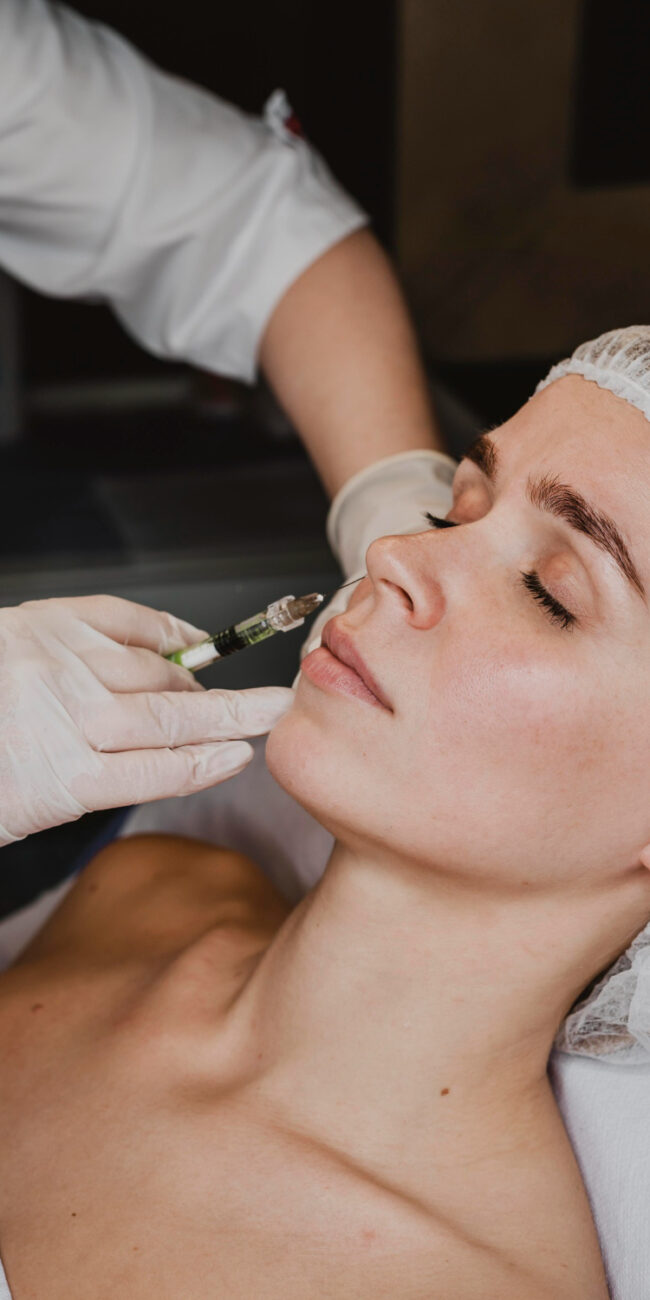
After the consultation, the skin is cleansed and disinfected. If necessary, an anesthetic cream is applied. The preparation is administered using a fine needle or cannula, depending on its properties, the treatment area, and the chosen technique.
The procedure may involve several precise injection points, a series of small deposits, or linear administration of the product within a specific tissue layer. The entire visit usually lasts about 30–60 minutes. Immediately after the injection, the doctor assesses the skin and provides recommendations specific to the product used.
Does the tissue stimulator treatment hurt?
The patient may experience a pricking sensation, a burning sensation, and temporary pressure during administration of the product. The degree of discomfort depends on the area, the depth of the injection, the number of injection sites, and individual sensitivity.
An anesthetic cream is used for many procedures. Preparations administered via a cannula may require one or several entry points, while the needle technique typically involves a greater number of injections. After the procedure, the skin may be tender for several days.
How many treatments are needed?
The number of sessions depends on the type of stimulator. Sample treatment regimens may include:
- polynucleotides — most often 2–4 treatments at intervals of about 2–4 weeks,
- hyaluronic acid-based bioremodeling products—often 2 treatments spaced about 4 weeks apart,
- L-polylactic acid—usually 1–3 sessions performed every few weeks,
- calcium hydroxyapatite—sometimes a single treatment followed by an assessment of whether another session is needed.
These are general guidelines. The exact treatment plan must be tailored to the intended use of the specific product and the patient’s tissue response.
When do the effects of tissue stimulators become visible?
Immediately after the injection, swelling or temporary tightness may be visible due to the presence of the product in the tissues. This is not always the intended effect of biostimulation.
With moisturizing products, the first signs of improvement may be noticeable after a few or several days. Results related to collagen remodeling appear more slowly—usually after a few weeks—and fully develop over the course of about 2–3 months. Changes should be evaluated after the swelling subsides and the planned treatment series is completed.
How long do the effects last?
The duration of the results depends on the product. The effects of polynucleotides and biomodeling products may last for several months. In the case of L-polylactic acid or calcium hydroxyapatite, the improvement may be visible for about 12–24 months, although it will not last the same amount of time for every patient.
Other factors that influence duration include age, skin condition, smoking, sun exposure, skincare routine, and the number of treatments performed. After a re-evaluation of the skin, a maintenance session can be scheduled.
Recovery and typical post-treatment symptoms
After the injection, you may experience redness, tenderness, swelling, small lumps, and bruising. The most noticeable reactions usually subside within 2–3 days, while bruising may last about a week.
With some products, small lumps may remain palpable for a longer period. Do not apply intense pressure or massage them yourself unless your doctor has recommended doing so. The time it takes for the skin to return to its normal appearance depends on the treatment area, the technique used, and the product’s properties.
Post-Treatment Recommendations for Tissue Stimulators
Avoid touching or applying pressure to the injection sites for the first 24 hours. It is best to wait until the next day to apply makeup. For about 24–48 hours, it is advisable to avoid intense exercise, alcohol, saunas, swimming pools, and hot baths.
Post-treatment massage should only be performed if recommended by a doctor. Some products require regular massage of the treated area, while for others it is not recommended. Until the skin has settled, use gentle skincare products and SPF 50 sunscreen.
Contraindications for tissue stimulators
The procedure is not performed during pregnancy or while breastfeeding, in the presence of an active infection, or if there is inflammation of the skin at the planned treatment site. Allergy to the ingredients of the selected product is also a contraindication.
The following conditions require individual evaluation:
- autoimmune diseases,
- active cancer,
- coagulation disorders,
- use of anticoagulants,
- uncontrolled diabetes,
- tendency to develop keloids,
- active herpes,
- the presence of permanent fillers in the treatment area,
- recent injection, laser, or surgical procedures.
Each product may have an additional list of contraindications based on its composition and intended use.
Possible Side Effects
The most common side effects are related to the injection. They include pain, swelling, redness, itching, bruising, and temporary unevenness at the injection site. Infection, prolonged inflammation, nodules, or a reaction to the product’s ingredients are also possible.
A rare but serious complication of injection procedures is impaired blood flow in a blood vessel. Increasing severe pain, pallor or reticular bruising of the skin, cooling of the skin, and visual disturbances require urgent evaluation. The patient should contact the clinic immediately and follow the instructions provided.
Tissue Stimulators in Warsaw's Ochota District - FAQ
Patients most often ask how biostimulators differ from fillers, when results become visible, and how to choose a product from among the many available options. Below, we answer the most important questions about the procedure, its effects, and recovery.
Do tissue stimulators fill in wrinkles?
Their main purpose is to stimulate skin regeneration and improve skin quality. Some products may provide some lifting effect, but they do not work in the same way as traditional fillers used to restore volume.
Can you return to work immediately after the procedure?
Most often, yes, but you should be aware that swelling, lumps, injection marks, and bruises may occur. If the procedure is performed under the eyes or on a larger area, visible symptoms may persist for several days.
Is one treatment enough?
It depends on the product. Some products can be administered once, and the results can be assessed after a few weeks, while polynucleotides and some biomodeling products are most often used in a series of 2–4 treatments.
Do tissue stimulators change facial features?
When properly selected, biostimulation is designed to improve skin quality and firmness without significantly increasing volume. Products that provide additional tissue support may have a subtle effect on the contours, which is why the scope of the treatment is determined during the consultation.
Can tissue stimulators be combined with other treatments?
Yes. They can be part of a treatment plan that includes mesotherapy, PRP, hyaluronic acid, laser therapy, or microneedle radiofrequency. These procedures are not always performed during a single visit—the doctor determines the order and safe intervals between them.
Do you need to massage your face after each treatment?
No. Massage is recommended after certain treatments, but may not be advisable after others. The patient should follow only the regimen prescribed by the doctor after the procedure.