


Pulmonologist in Warsaw
A chronic cough, shortness of breath, wheezing, or recurrent infections may require a consultation with a pulmonologist. At CareLife Clinic in Warsaw, a pulmonologist conducts a detailed medical history interview, examines the patient, reviews previous test results, and determines the appropriate next steps for diagnosis. We assist in the diagnosis and management of conditions such as asthma, COPD, chronic bronchitis, and complications from lung infections. It’s a good idea to bring your chest X-ray or CT scan results, previous spirometry results, hospital discharge summaries, and a list of medications and inhalers you’re currently using to your appointment.
+340 Satisfied Patients
+12 Specialists on the team
+2,400 Procedures per year
+15 Years of experience

Diagnosis and treatment of respiratory diseasesat
in Warsaw
A pulmonology consultation helps determine the cause of a chronic cough, shortness of breath, wheezing, chest tightness, and recurrent infections. A pulmonologist evaluates respiratory function, reviews previous test results, and selects the necessary tests to confirm or rule out asthma, COPD, chronic bronchitis, and other lung diseases.
At Care Life Clinic in Warsaw, pulmonology consultations are conducted by a physician with many years of experience in diagnosing lung diseases and allergic conditions. The visit can serve to diagnose new symptoms, evaluate abnormal X-ray or CT scan results, and monitor the effectiveness of current treatment.
What does pulmonologist
do at CARELIFE CLINIC?
A pulmonologist, also known as a lung specialist, diagnoses, treats, and manages respiratory system disorders. They assess the condition of the bronchi, lungs, and pleura, and determine whether reported symptoms result from infections, allergies, airway obstruction, structural changes, or other causes.
Patients see a pulmonologist for conditions such as asthma, COPD, chronic bronchitis, emphysema, recurrent pneumonia, interstitial lung diseases, and abnormal imaging test results. The specialist can also evaluate symptoms occurring after an infection and assess the impact of smoking, air pollution, and occupational exposures on lung function.
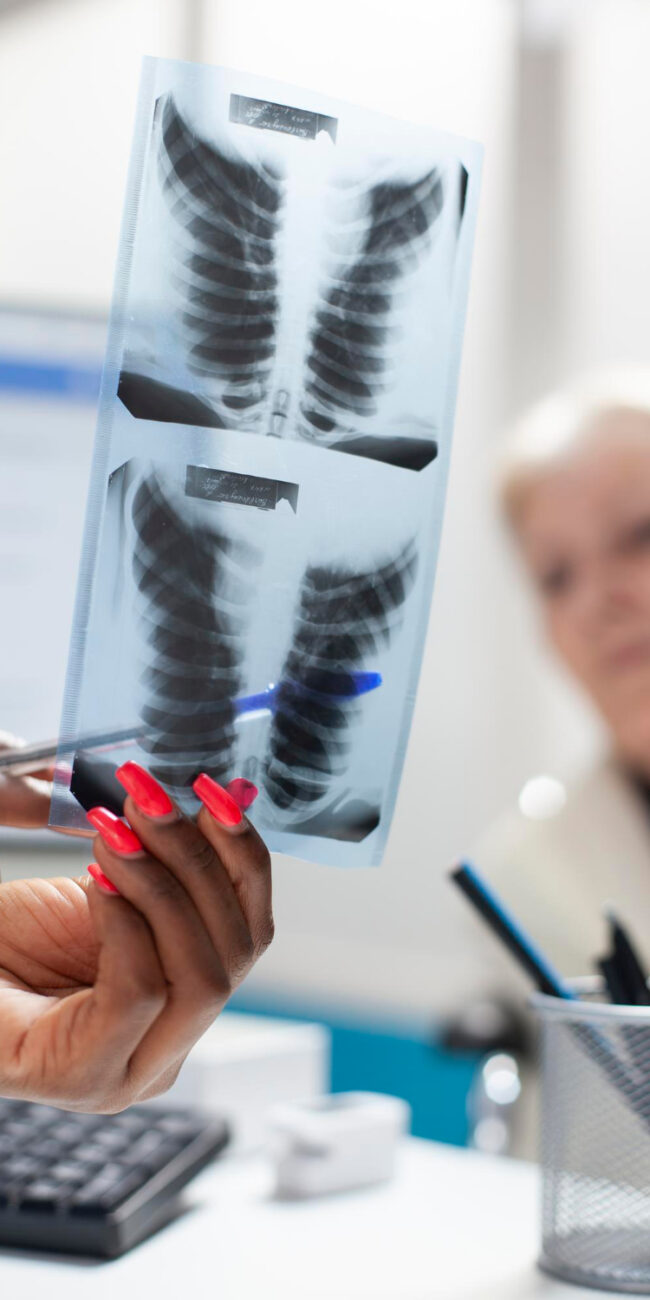
Pulmonologists at Carelife Clinic

Our Specialist: Specialist in Pulmonology and Internal Medicine
Robert Staniszewski, M.D., Ph.D. – He is an outstanding specialist in pulmonary and internal medicine with over 30 years of clinical experience. He guarantees the highest standard of diagnosis and effective treatment of respiratory diseases and allergies. As a doctor by vocation, he is distinguished by his exceptionally ethical and personalized approach to patients. Respecting your time and budget, he focuses exclusively on sound medical practice and avoids costs associated with unnecessary tests. He takes a comprehensive view of the patient’s health—effectively diagnosing and treating comorbid conditions that negatively affect your breathing comfort. By choosing a consultation with Dr. Staniszewski, you are entrusting your health to an experienced practitioner for whom your safety and health are the top priority.
We’re open 7 days a week!
When should you see a pulmonologist?
A consultation is recommended if a cough persists for several weeks, recurs for no apparent reason, or is accompanied by shortness of breath, wheezing, coughing up phlegm, or pain when breathing. You should also see a pulmonologist if you experience rapid fatigue, decreased exercise tolerance, or a feeling that you cannot take a full breath.
A pulmonologist can also help after an infection if a cough or weakness persists despite completion of treatment. Smokers and former smokers, patients exposed to dust or chemicals, and people with recurrent bronchitis and pneumonia should consider seeking a consultation.
What conditions does a pulmonologist treat?
The scope of pulmonology includes, among others, bronchial asthma, COPD, chronic bronchitis, bronchiectasis, pneumonia, pleural diseases, and interstitial lung diseases. A pulmonologist also diagnoses tuberculosis, sarcoidosis, occupational respiratory diseases, and abnormalities detected on chest X-rays or CT scans.
If lung cancer is suspected, the pulmonologist’s role is to guide the diagnostic process appropriately and refer the patient to the appropriate center. The scope of the consultation depends on the patient’s symptoms, medical history, and comorbidities. Not every respiratory complaint indicates lung disease—similar symptoms may also have cardiac, ENT, allergic, or gastrointestinal causes.
Pulmonologist in Warsaw - Price List
Pulmonology Consultations – R. Staniszewski, M.D., Ph.D.
- Pulmonology consultation + spirometry – 440 PLN (20 min)
- Pulmonology consultation + spirometry with a bronchodilator test – 540 PLN (20 min)
- Pulmonology consultation – 320 PLN (20 min)
- Online pulmonology consultation – 320 PLN (20 min)
- Pulmonology and Allergy Consultation for Adults – 320 PLN (20 min)
- Pulmonology telephone consultation – 320 PLN (20 min)
Are you thinking about choosing a service?
We can help you
We’re open 7 days a week!
Pulmonologist in Warsaw’s Ochota District — Consultation at Care Life Clinic
Care Life Clinic is located at 3 Józefa Siemieńskiego Street in Warsaw’s Ochota district. A private parking lot with 30 spaces is available next to the building. The clinic is open Monday through Friday from 8:00 a.m. to 9:00 p.m., and on Saturdays and Sundays from 8:00 a.m. to 3:00 p.m. The pulmonologist’s availability depends on the current appointment schedule.
The ability to receive internal medicine, cardiology, and diagnostic imaging consultations all under one roof makes it easier to plan a comprehensive course of treatment for shortness of breath or symptoms of unclear origin.
Chronic Cough, Shortness of Breath, and Wheezing
In adults, a cough lasting longer than eight weeks is most often considered chronic. It may be caused by asthma, COPD, reflux, postnasal drip, a chronic infection, or the effects of certain medications, such as angiotensin-converting enzyme (ACE) inhibitors used to treat hypertension.
Wheezing may indicate airway narrowing, but it is not sufficient on its own to diagnose asthma. Shortness of breath also has many possible causes—ranging from lung and heart diseases to anemia, reduced physical fitness, or anxiety disorders. Therefore, it is necessary to evaluate the entire clinical picture, rather than a single symptom.
Respiratory Warning Signs
The following require immediate medical attention: rapidly worsening shortness of breath, bluish discoloration of the lips or fingertips, difficulty speaking a complete sentence, loss of consciousness, and sudden chest pain accompanied by breathing difficulties. Coughing up blood also requires urgent evaluation, especially if the bleeding is profuse or recurrent.
A marked decrease in oxygen saturation compared to the patient’s typical level is also cause for concern. A value of approximately 92% or lower in a person without a diagnosed chronic respiratory failure requires urgent medical evaluation. Consultation should also not be delayed in cases of a cough accompanied by prolonged fever, night sweats, weight loss, or marked weakness.
Bronchial asthma and obstructive pulmonary diseases
Asthma is a chronic inflammatory disease of the airways in which symptoms typically vary in severity. Typical symptoms include episodes of shortness of breath, wheezing, chest tightness, and a cough that worsens at night, in the early morning, after exercise, during an infection, or after exposure to an allergen.
The diagnosis should not be based solely on symptoms. Confirmation of variable airflow limitation is required, e.g., via spirometry with a bronchodilator test, peak expiratory flow measurements, or other pulmonary function tests. Treatment most often involves inhaled medications, control of triggering factors, and regular assessment of inhaler technique.
COPD and Diagnosis in Smokers
Chronic obstructive pulmonary disease most commonly develops in smokers and former smokers, but the risk is also increased by dust, exhaust fumes, heating smoke, and occupational exposure to irritants. Symptoms may include progressive exertional shortness of breath, a daily cough, sputum production, and recurrent infections.
The primary test used to confirm persistent airway obstruction is spirometry, which is most often evaluated after the administration of a bronchodilator. However, the spirometry result alone is not sufficient to diagnose COPD—the doctor also considers symptoms, smoking history, and other risk factors. Exposure can be described in pack-years: the number of packs smoked per day is multiplied by the number of years smoked.
Recurrent Respiratory Tract Infections
Recurrent bronchitis, multiple courses of antibiotic therapy within a year, or repeated episodes of pneumonia require an evaluation of the underlying cause. The problem may result from, among other things, uncontrolled asthma, COPD, bronchiectasis, immune disorders, chronic aspiration of gastric contents, or anatomical abnormalities.
During the consultation, the pulmonologist analyzes the frequency of infections, their course, imaging results, and the treatment administered. It is important to note whether changes in the lungs always occur in the same location. Depending on the findings, the doctor may order spirometry, an X-ray, a CT scan, laboratory tests, or an immune function assessment.
Bronchitis, pneumonia, and cough following an infection
A cough following an infection may persist for several weeks because the respiratory tract epithelium remains irritated and the bronchi may exhibit temporary hyperreactivity. A consultation is recommended if symptoms do not improve, a fever recurs, shortness of breath worsens, or the patient coughs up purulent or bloody sputum.
After pneumonia, a pulmonologist can assess whether symptoms are resolving appropriately and whether a follow-up imaging study is needed. Antibiotics are not routinely prescribed for every case of cough or bronchitis—the decision depends on the suspicion of a bacterial infection, the clinical presentation, and test results.
Respiratory Allergies and Pulmonology Consultation
Inhalant allergies can cause not only a runny nose and sneezing, but also a chronic cough, wheezing, and shortness of breath. Symptoms may worsen seasonally during pollen season or year-round after exposure to house dust mites, animal dander, or mold.
A pulmonologist determines whether the allergy affects only the upper respiratory tract or coexists with asthma. Diagnostic methods include spirometry, a bronchodilator test, allergy testing, laboratory tests, and—when indicated—measurement of nitric oxide in exhaled air. Not all of these tests need to be performed during a single visit or at the same facility.
Tests Ordered by a Pulmonologist
The scope of diagnostic testing is tailored to the symptoms and suspected condition. A pulmonologist may order spirometry, a bronchodilator test, plethysmography, assessment of lung diffusion capacity (DLCO), a chest X-ray, or a chest CT scan. A complete blood count, CRP, eosinophil count, total and specific IgE levels, sputum analysis, or allergy testing may also be useful.
In selected cases, FeNO testing, exercise testing, sleep studies, bronchoscopy, or microbiological testing may be necessary. Some tests require a referral to an external laboratory or hospital. The doctor should explain the purpose of a given test and how its results may influence further treatment.
Spirometry and spirometry with a bronchodilator test
Spirometry measures, among other things, forced vital capacity (FVC), forced expiratory volume in one second (FEV1), and the ratio between them. The test helps detect airflow limitation and is used in the diagnosis of asthma and COPD, as well as in monitoring treatment.
A bronchodilator test involves performing spirometry before and after administering a bronchodilator. The doctor checks whether airflow has improved significantly. The result should always be interpreted in conjunction with the patient’s symptoms and medical history—a positive response to the medication does not, on its own, distinguish between asthma and COPD.
Chest X-ray, CT scan, and lung ultrasound
A chest X-ray is the basic imaging test used, among other things, when pneumonia, pleural effusion, or other abnormalities in the chest are suspected. However, a normal X-ray result does not rule out all respiratory diseases.
Computed tomography provides a much more detailed view of lung structures and can reveal, among other things, small nodules, bronchiectasis, emphysema, and interstitial changes. Lung ultrasound is primarily useful for evaluating the pleura, fluid, and changes located near the surface of the lung. It does not replace CT or spirometry, as each of these tests addresses different diagnostic questions.
Diagnosis of Asthma, Allergies, and Chronic Cough
In the diagnosis of asthma, the variability of symptoms and objective confirmation of variable airflow limitation are crucial. Depending on the clinical situation, spirometry with a bronchodilator test, PEF measurements, provocation tests, or assessment of type 2 inflammation using FeNO and eosinophils are used.
Chronic cough requires a broader perspective. In addition to asthma, its causes may include chronic rhinitis, reflux, smoking, COPD, infections, bronchiectasis, and certain medications. Not all tests are performed automatically—the diagnostic process is organized in stages based on the most likely causes.
Treatment Plan and Management of Respiratory Diseases
The treatment plan may include inhaled bronchodilators, inhaled glucocorticosteroids, antiallergic therapy, antibiotic therapy when indicated, and measures to limit exposure to triggers. The choice of medications depends on the diagnosis and should not be based solely on similar symptoms.
During follow-up visits, the pulmonologist assesses the frequency of exacerbations, shortness of breath, cough, exercise tolerance, and test results. The pulmonologist also checks the patient’s inhaler technique, as errors during inhalation can significantly reduce the amount of medication reaching the lungs. If necessary, the pulmonologist adjusts the dose or changes the medication.
Frequently Asked Questions About Pulmonology and Visits to a Pulmonologist
Before their first consultation, patients often wonder whether a referral is required, what test results they should bring, and whether they need to undergo spirometry or an X-ray before the appointment. Below, we answer the most common questions about private pulmonology appointments at Care Life Clinic.
How to Prepare for a Visit with a Pulmonologist?
For the consultation, it’s a good idea to bring your medical records, X-ray and chest CT scan images, previous spirometry results, hospital discharge summaries, and documentation regarding any infections. You’ll also need a list of all medications you’re taking, along with their dosages.
If the patient uses inhalers, they should bring them along. This will allow the doctor to check their inhalation technique. It’s helpful to note when symptoms appear, what triggers them, and whether they occur at night or after physical exertion. Do not stop using inhaled medications on your own before a scheduled spirometry test—the healthcare facility or doctor should provide appropriate instructions in advance.
Pulmonology Consultation—What to Expect During the Visit?
The visit begins with a discussion of the symptoms, their duration, and the situations in which they worsen. The doctor asks about past infections, allergies, smoking, occupational exposure, family medical history, medications being taken, and previous inhalation therapy.
Next, the pulmonologist conducts an examination, which may include auscultation of the chest, an assessment of breathing patterns, and—depending on the indications—a measurement of oxygen saturation. The doctor also analyzes the results of spirometry, laboratory tests, and imaging studies. Based on this information, the pulmonologist can establish a diagnosis, order further diagnostic tests, initiate treatment, or modify the current treatment plan.
Shortness of breath—when is a pulmonology evaluation needed?
Shortness of breath that requires evaluation by a pulmonologist may occur while walking, climbing stairs, running, or even at rest. It is important to determine whether it began suddenly or developed over months, and whether it is accompanied by a cough, wheezing, chest pain, leg swelling, or heart palpitations.
Pulmonary evaluation should be initiated when symptoms suggest asthma, COPD, interstitial lung disease, complications from an infection, or abnormalities on imaging studies. Sudden, severe shortness of breath is not a reason to wait for a scheduled appointment—it may require urgent care.
What conditions does a pulmonologist treat?
The field of pulmonology includes, among others, bronchial asthma, COPD, chronic bronchitis, emphysema, pneumonia, pleural diseases, and interstitial lung diseases. A pulmonologist also diagnoses tuberculosis, sarcoidosis, occupational respiratory diseases, and abnormalities detected on chest X-rays or CT scans.
If lung cancer is suspected, the pulmonologist’s role is to guide the diagnostic process appropriately and refer the patient to the appropriate center. The scope of the consultation depends on the patient’s symptoms, medical history, and comorbidities. Not every respiratory complaint indicates lung disease—similar symptoms may also have cardiac, otolaryngological, allergic, or gastrointestinal causes.
What should you bring to a pulmonology consultation?
Please bring your identification, a list of medications, any inhalers you use, previous spirometry results, hospital discharge summaries, and reports and images from chest X-rays or CT scans.
When should a cough be a cause for particular concern?
A cough that lasts longer than eight weeks, recurs without an obvious cause, or is accompanied by shortness of breath, wheezing, weight loss, or fever requires medical consultation. Hemoptysis requires urgent medical evaluation.