


Photorejuvenation in Warsaw – Lumecca Pigmentation Removal
Lumecca photorejuvenation uses intense pulsed light (IPL), which is absorbed by the melanin in pigmented lesions and by the hemoglobin in vascular lesions. The treatment helps reduce the appearance of sunspots, freckles, uneven skin tone, and redness, while also improving the skin’s radiance. At CareLife Clinic in Warsaw’s Ochota district, we tailor the treatment parameters to your skin type, the nature of the condition, and the treatment area—face, neck, décolletage, or hands. The treatment plan typically includes 1–3 sessions spaced several weeks apart. Discolorations may first darken and then gradually peel off and lighten.
+340 Satisfied Patients
+12 Specialists on the team
+2,400 Procedures per year
+15 Years of experience
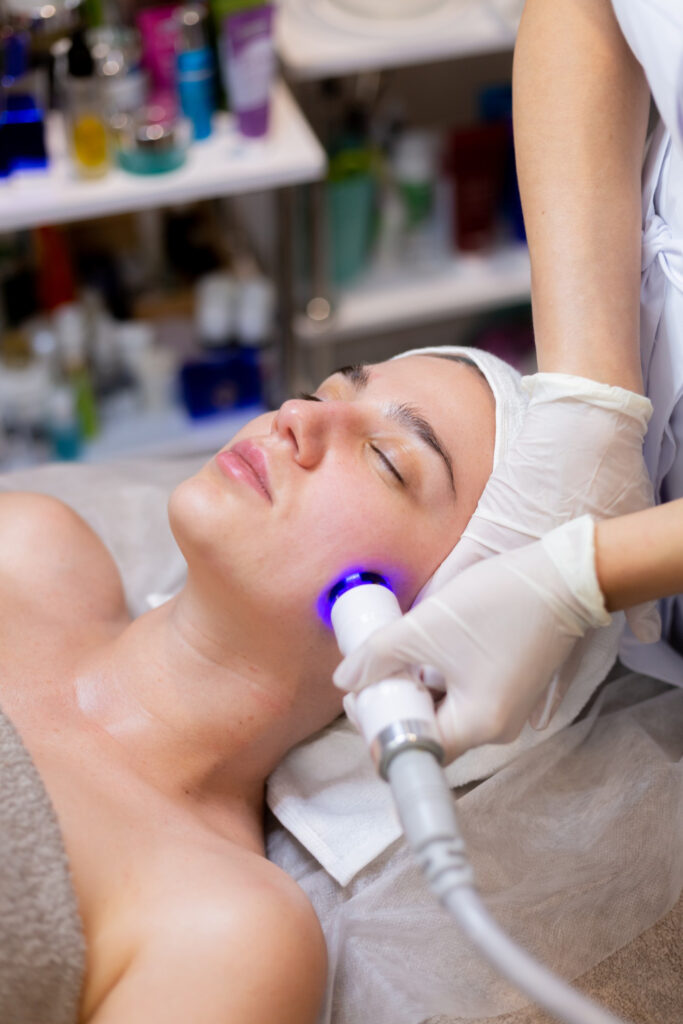
Photorejuvenation and Laser Treatment for Pigmentation in Warsaw
At CareLife Clinic, we perform photorejuvenation using Lumecca IPL technology. The treatment targets uneven skin tone, sunspots, freckles, redness, erythema, and superficial vascular lesions. It can be applied to individual areas, such as the cheeks, nose, or hands, as well as larger areas—the entire face, neck, or décolletage. Although patients often search for this service under the term “laser removal of discoloration,” Lumecca uses intense pulsed light rather than a single laser beam. We tailor the settings to the patient’s phototype, the type of lesions, and the skin’s response, allowing us to address several signs of photoaging in a single session.
What is
photorejuvenation at CARELIFE CLINIC?
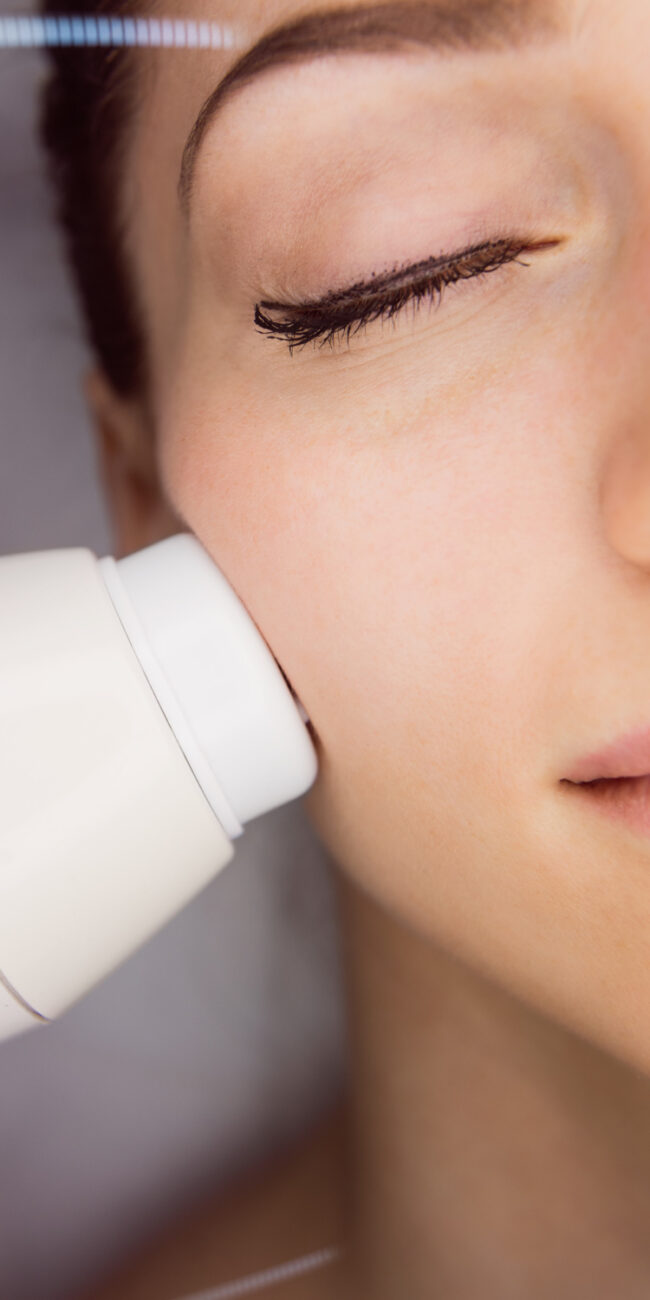
Photorejuvenation is a non-invasive procedure in which controlled pulses of light are directed at the pigment present in the skin and the superficial blood vessels. The treatment does not require any incisions or injections. Its goal is to lighten selected discolorations, reduce redness, even out skin tone, and restore a fresher appearance to the skin. Unlike fractional CO₂ laser resurfacing, photorejuvenation does not involve the ablative removal of layers of the epidermis. As a result, the skin usually heals faster, and the patient can return to daily activities sooner, although the discoloration may be darker and more visible for a few days.
We’re open 7 days a week!
How does IPL light treat discoloration, erythema, and broken capillaries?
Light energy is absorbed by specific chromophores: melanin found in pigmented lesions and hemoglobin present in blood vessels. The absorbed light is converted into heat and acts on the targeted lesion, sparing the surrounding tissues as much as possible.
Pigmentation changes may temporarily darken after the treatment and then gradually peel off and lighten. Fine blood vessels may fade immediately after the pulse or become less visible in the following weeks.
Lumecca — IPL technology for skin photorejuvenation
Lumecca is an intense pulsed light (IPL) technology developed by InMode. It can be used to treat both pigmentation issues and superficial vascular lesions. During the procedure, the specialist adjusts the energy level, pulse duration, and other settings based on the skin phototype, the nature of the problem, and the area being treated.
Lumecca is not a fractional laser. The treatment does not create micro-injuries across the entire surface of the skin, but instead targets its energy primarily at melanin and hemoglobin.
Who is photorejuvenation for?
This treatment is intended for people who notice the effects of long-term UV exposure on their skin: sunspots, uneven skin tone, redness, fine broken capillaries, or a loss of the skin’s fresh appearance. It can be performed on both women and men.
Before beginning treatment, it is necessary to assess the patient’s skin type, degree of tanning, and the nature of the lesions. Darker skin types, melasma, and skin prone to post-inflammatory hyperpigmentation require special caution.
Photorejuvenation in Warsaw - Price List
Skin Rejuvenation – Morpheus8
- Face – 1,600 PLN
- Face and neck – 2,000 PLN
- Face + neck + décolleté – 2,200 PLN
- Hands – 1,000 PLN
Laser Skin Rejuvenation – SMAXELL CO2 Fractional Laser
- Face – 1,400 PLN
- Face and neck – 1,700 PLN
- Face + neck + décolleté – 2,200 PLN
Laser treatment of vascular lesions – Optimas Vasculaze Nd:YAG
- Face – 600 PLN
- Face and neck – 800 PLN
- Nose / chin – 300 PLN
- Cheeks – 400 PLN
- Legs – small area – 500 PLN
- Legs – large area – 900 PLN
Discoloration treatment – Optimas Lumecca 515 IPL
Broad-spectrum light – sun-induced and hormonal skin discoloration, freckles.
- Face – 1,000 PLN
- Face + neck + décolletage – 1,600 PLN
- Small area (nose) – 300 PLN
- Medium area (cheeks) – 600 PLN
- Hands – 400 PLN
Rosacea treatment – Optimas Lumecca 515 IPL
Broadband light.
- Face – 1,100 PLN
- Face + neck – 1,600 PLN
- Small area (nose/chin) – 300 PLN
- Medium area (cheeks) – 600 PLN
Rosacea Treatment – Optimas Lumecca 515 IPL
Broadband light.
- Face – 1,100 PLN
- Face + neck – 1,500 PLN
- Small area (nose) – 400 PLN
Are you thinking about choosing a service?
We can help you
We’re open 7 days a week!
Pre-procedure consultation and evaluation
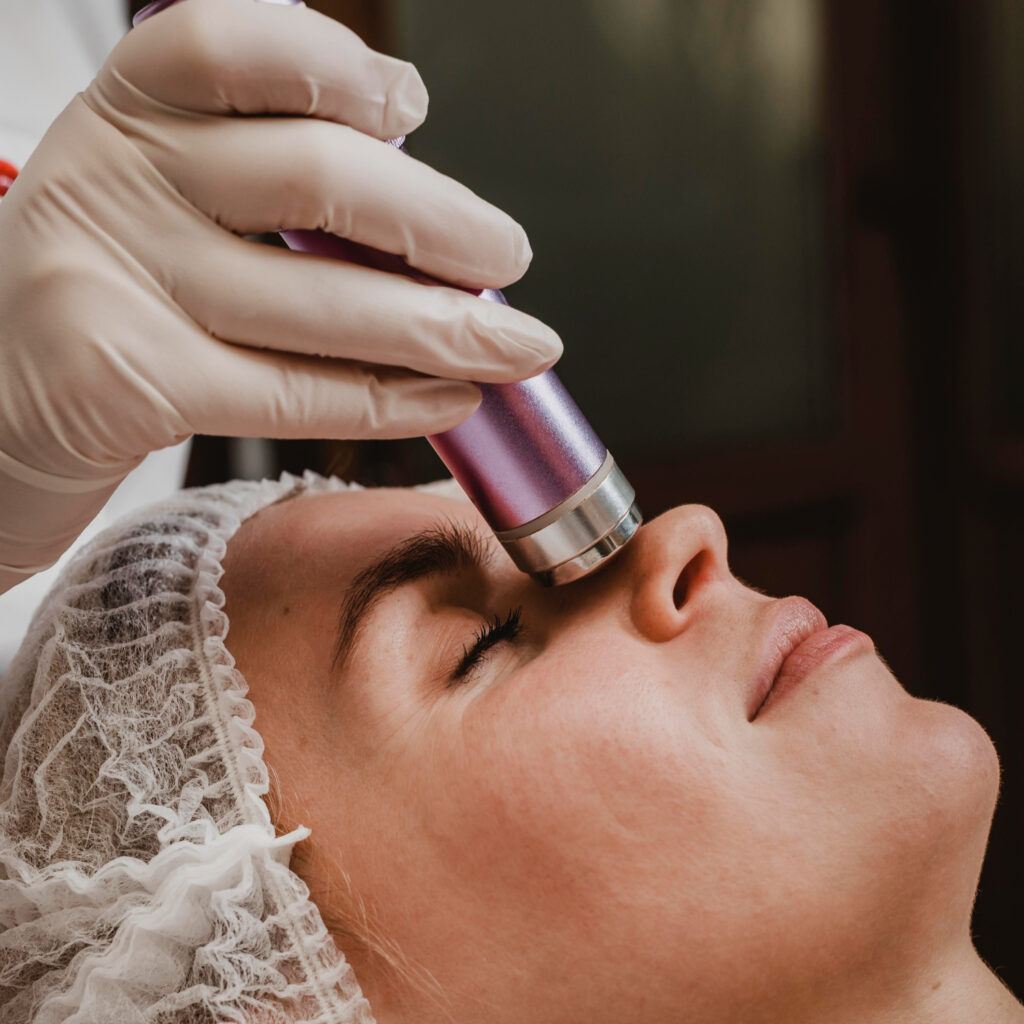
The assessment includes an evaluation of the type and depth of discoloration, phototype, degree of tanning, skin condition, and expected results. The specialist also asks about chronic conditions, a tendency toward cold sores, medications being taken, herbal remedies, retinoids, previous treatments, and the skin’s reaction to light.
Based on this information, the treatment area, device settings, and the expected number of sessions are determined. If the appearance of a pigmented lesion raises concerns, a dermatological consultation and dermatoscopy may be necessary before the procedure.
Indications for photorejuvenation and the reduction of hyperpigmentation
The most common indications include:
- – sunspots and age spots,
- – freckles and localized pigmentation,
- – uneven or sallow skin tone,
- – erythema and persistent redness,
- – superficial dilated capillaries,
- – fine lines and the first signs of photoaging,
- – visible differences in skin tone between the face, neck, and décolletage,
- – sun damage on the backs of the hands.
It is important to accurately diagnose the problem, because not every pigmented lesion can be safely treated with IPL.
Aesthetic Medicine Doctors at Carelife Clinic


The treatment is preceded by a consultation with a specialist, who assesses the condition of the skin, identifies the nature of the lesions, and selects safe device settings. Medical supervision is particularly important in cases of atypical discoloration, skin diseases, the use of photosensitizing medications, and when planning a combination therapy involving IPL with a CO₂ laser, microneedle radiofrequency, or regenerative treatments.Fractional CO₂ laser treatments at CareLife Clinic are performed by physicians with expertise in laser therapy, healing processes, and the diagnosis of skin lesions. The specialist selects the power, microbeam density, and number of passes, taking into account the patient’s phototype, skin thickness, and the risk of hyperpigmentation. Proper patient selection is particularly important for deep scars, melasma, darker skin types, and skin prone to abnormal healing.
Photorejuvenation in Warsaw’s Ochota District — a treatment at CareLife Clinic
We perform Lumecca photorejuvenation treatments at CareLife Clinic, located at 3 Józefa Siemieńskiego Street in Warsaw’s Ochota district. The clinic is located near the Medical University of Warsaw (WUM) University Clinical Center and features a private, free parking lot with 30 spaces.
Before the procedure, we conduct a pre-treatment evaluation to assess skin discoloration, phototype, and any potential contraindications. CareLife Clinic is open Monday through Friday from 8:00 a.m. to 9:00 p.m., as well as Saturdays and Sundays from 8:00 a.m. to 3:00 p.m.
Photorejuvenation for sun-induced discoloration, freckles, and pigment spots
Lumecca is particularly effective for superficial melanin-containing discolorations, such as sunspots, freckles, and age spots. After treatment, the affected areas may become noticeably darker. This is a typical reaction that precedes their gradual peeling and lightening.
Melasma, post-inflammatory hyperpigmentation, or lesions with an ambiguous appearance may require a different course of treatment. Spots that change shape, color, or size, have irregular edges, bleed, or itch should be evaluated by a dermatologist beforehand.
Reduction of redness, visible blood vessels, and uneven skin tone
IPL light can be used to reduce the appearance of superficial blood vessels, diffuse erythema, and mottled skin tone. The energy absorbed by hemoglobin causes controlled heating of the vascular lesion. The extent of improvement depends, among other factors, on the diameter and depth of the vessels and the cause of the redness.
Extensive vascular lesions, active rosacea, or deeper-lying vessels may require a separate treatment plan, a dermatological consultation, or the use of a different technology.
Photorejuvenation for Signs of Photoaging
Photoaging is the result of chronic exposure to UV radiation. It can manifest as discoloration, redness, roughness, loss of even skin tone, and fine wrinkles. Photorejuvenation focuses primarily on pigmentary and vascular changes, and controlled tissue heating can further support improvements in skin quality.
However, this treatment is not intended to remove deep wrinkles or significant sagging. For such conditions, microneedle RF, fractional CO₂ laser, or a properly selected combination therapy may provide better results.
Treatment for the face, neck, décolletage, and hands
Most often, photorejuvenation is performed on the entire face or on areas particularly exposed to the sun: the cheeks, nose, forehead, and temples. The treatment may also include the neck, décolletage, and the backs of the hands, where sunspots and uneven skin tone often appear.
Each area requires its own set of settings. The skin on the neck and décolletage is more delicate than the skin on the face, so you should not use the same settings for all areas.
Photorejuvenation vs. CO2 Laser, Morpheus8, and Skin Texture Treatments
Lumecca IPL is primarily recommended for hyperpigmentation, erythema, broken capillaries, and uneven skin tone. The fractional CO₂ laser has a more intense effect on the skin’s structure and is used to treat acne scars, deeper wrinkles, enlarged pores, and uneven skin texture. Morpheus8 combines microneedling with radiofrequency and is primarily aimed at tissue remodeling, improving skin firmness, and reducing sagging.
These treatments can complement each other within a single plan, but they are typically performed in a specific order, with the necessary intervals between sessions to allow the skin to regenerate.
When is photorejuvenation not the best choice?
Another method is worth considering when the primary concerns are deep scars, noticeable sagging, deep wrinkles, or a highly uneven skin texture. Photorejuvenation is also not a substitute for the treatment of active acne, the diagnosis of suspicious moles, or the treatment of dermatological conditions.
Melasma requires a cautious approach, as it can recur and react to heat or radiation. In such cases, the key is an accurate diagnosis, consistent photoprotection, and an individualized treatment plan.
How do you prepare for photorejuvenation?
For about 4 weeks before the procedure, you should avoid intense sun exposure and tanning beds. You should also avoid using self-tanning products on the area where the procedure will be performed. A few days before your appointment, you should typically stop using irritating skincare products containing retinol, strong acids, or exfoliating ingredients, as recommended by your specialist.
During the consultation, you must disclose all medications, supplements, and herbal products you are taking, especially those that may increase your skin’s sensitivity to light. Do not stop taking any medications prescribed by your doctor on your own. On the day of the procedure, your skin should be clean and free of makeup, perfumed lotions, and self-tanning products.
How does the photorejuvenation procedure work?
After the skin is cleansed, the patient is given protective eyewear. A gel may be applied to the treatment area to facilitate energy conduction and cool the skin. The specialist then places the Lumecca handpiece on the skin and delivers a series of controlled pulses.
The duration of the procedure depends on the size of the area. A single treatment session usually lasts about 20–40 minutes. Immediately after the procedure, the skin is re-evaluated and treated with a soothing product and sunscreen.
Does photorejuvenation hurt?
During the pulse, you may feel a brief prick, warmth, or a sensation similar to a light snap from a rubber band. The intensity of these sensations depends on the treatment settings, the treatment area, and individual sensitivity. The sensations may be more pronounced around the nose, the upper lip, and areas with a large number of pigmented or vascular lesions.
The head cooling system helps reduce discomfort. Most people do not require anesthesia, but the method of skin preparation is determined on a case-by-case basis during the initial evaluation.
How many treatments are needed to lighten discoloration?
The first improvement can be seen after a single session; however, in cases of extensive discoloration or concomitant erythema, a series of 1–3 treatments is usually scheduled. Sessions are usually performed at intervals of about 3–4 weeks to allow the skin time to settle down and to assess its response.
The number of treatments depends on the type of lesions, their depth, your skin type, and how well you follow sun protection guidelines. We cannot guarantee the complete removal of every spot, especially if the problem is hormone-related or prone to recurrence.
When can you see the results of photorejuvenation?
Pigmentation changes may begin to darken within the first 24–48 hours. They then gradually move toward the skin’s surface, peel off, and become lighter. This process can take anywhere from a few days to about two weeks, depending on the area and the intensity of the reaction.
Redness and small blood vessels may gradually diminish over the following weeks. The final assessment of the results is conducted after the skin has settled, not immediately after the procedure.
Recovery After Photorejuvenation
Immediately after the procedure, you may experience redness, a sensation of warmth, and slight swelling, especially around the cheeks and under the eyes. These symptoms usually subside within a few hours or 1–2 days.
In the days that follow, the discoloration may appear darker and resemble small dots or “coffee grounds.” Do not pick at them or try to speed up the peeling process with a scrub. Most people return to their daily routines the next day if the skin reaction is mild.
Post-Treatment Recommendations and SPF Protection
After photorejuvenation, use a cream with high SPF 50 protection and reapply it throughout the day. For a few days, it’s a good idea to use a mild cleanser and a moisturizer that is free of alcohol, fragrances, and exfoliating ingredients.
Avoid saunas, hot baths, intense exercise, and other factors that can cause the skin to overheat for at least 24–48 hours. Do not use retinol, acids, mechanical exfoliants, or sonic brushes until the skin has healed. Makeup may be applied once the redness has subsided, provided the epidermis is not damaged.
Contraindications for photorejuvenation
The most important contraindications include a recent sunburn, active herpes or a skin infection, damage to the epidermis, photosensitivity, certain photodermatoses, and the use of photosensitizing medications or herbs. The procedure is also generally not performed during pregnancy or while breastfeeding.
Additionally, autoimmune diseases, uncontrolled diabetes, impaired wound healing, a tendency toward keloids, photosensitive epilepsy, retinoid therapy, and a history of skin cancer require further evaluation. The final decision is made by a specialist after taking a medical history.
Possible Side Effects and Warning Signs
A typical reaction includes temporary redness, warmth, slight swelling, and darkening of the discoloration. Less commonly, blisters, scabs, temporary discoloration, or depigmentation of the skin may occur. The risk is increased by a recent tan, improperly selected treatment parameters, and sun exposure after the procedure.
Contact the clinic if you experience severe or worsening pain, extensive blisters, oozing lesions, rapidly enlarging swelling, or signs of infection. Do not pop blisters or remove scabs on your own.
Photorejuvenation in Warsaw’s Ochota District - FAQ
Before the procedure, patients most often ask about the number of sessions required, whether the treatment can be performed in the summer, and what their skin will look like in the first few days after the treatment. Below, we explain the most important aspects of Lumecca photorejuvenation.
Is Lumecca a laser?
No. Lumecca uses intense pulsed light (IPL) within a specific wavelength range. A laser emits a more uniform beam of light with different properties. The term “laser pigmentation removal” is often used colloquially, but technically, the Lumecca treatment falls under the category of IPL therapy.
Will the discoloration disappear completely?
Superficial sunspots and freckles can be significantly lightened, but the extent of the results varies from person to person. Some conditions require a series of treatments, and hormonal and post-inflammatory hyperpigmentation may recur. Daily use of SPF 50 is very important.
Can photorejuvenation be performed in the summer?
The procedure should not be performed on skin that has recently been exposed to the sun. If the patient can consistently avoid sun exposure and use high-SPF sunscreen, the specialist will assess on a case-by-case basis whether the procedure can be performed. However, the treatment is most often scheduled during the fall and winter months.
When can I apply makeup?
You can usually apply light makeup the next day, provided that the redness has subsided and there are no blisters or skin damage. Apply cosmetics gently, without rubbing or exfoliating the darker areas.
How does Lumecca differ from a fractional CO₂ laser?
Lumecca is primarily designed to treat hyperpigmentation, erythema, superficial telangiectasias, and uneven skin tone. The CO₂ laser causes micro-damage to the skin and more intensively remodels its structure, which is why it is more commonly used for scars, pores, and deeper wrinkles. It also involves a longer healing process.
How long do the effects of photorejuvenation last?
The lightened areas may not reappear in the exact same spot, but the skin remains susceptible to UV radiation, hormones, and the aging process. New discoloration may develop over time. The longevity of the results is supported by using SPF protection, avoiding sun exposure, and proper skincare.